Five Medical Cleaning Claims Facility Managers Should Verify
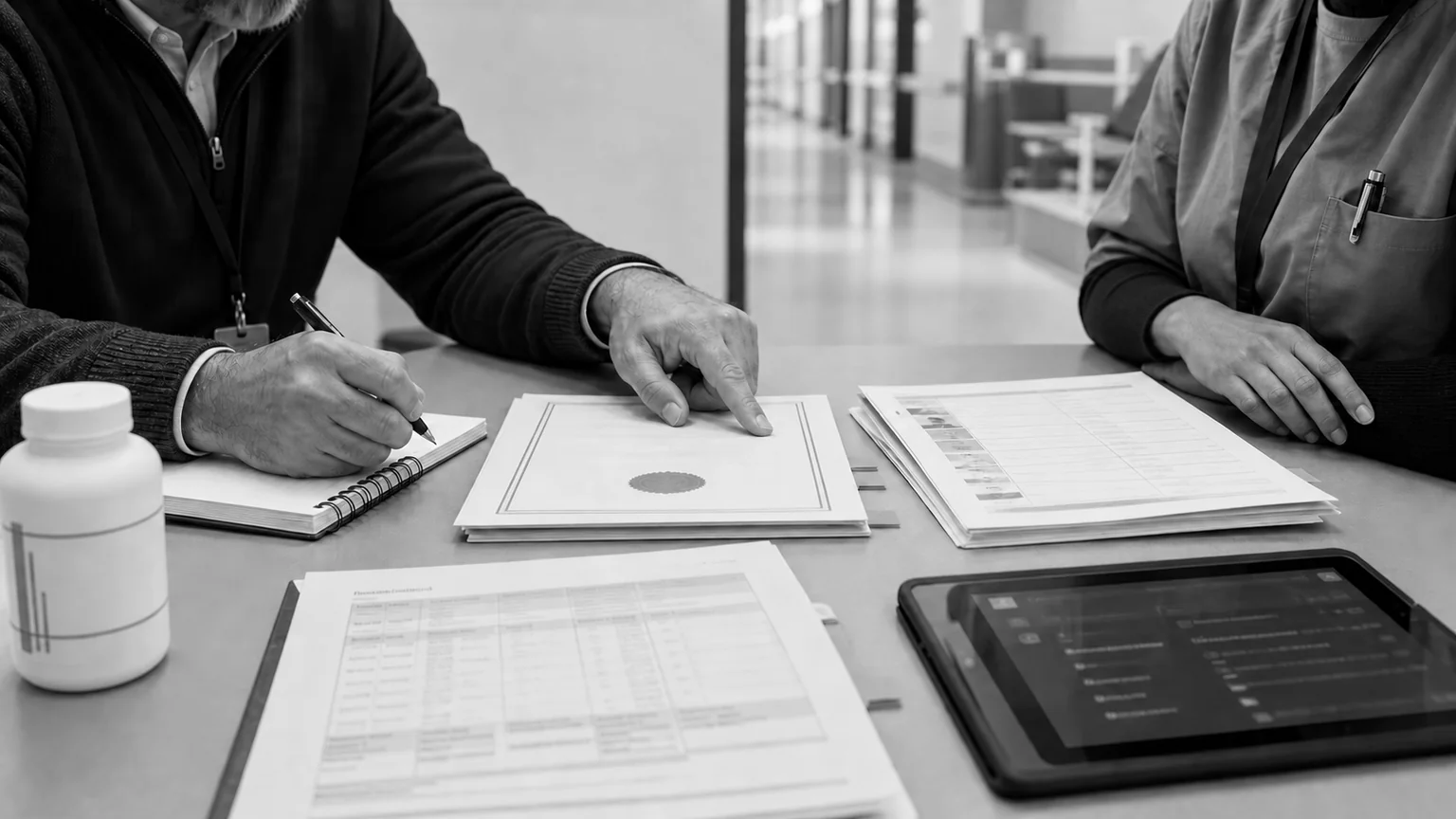
Medical-cleaning proposals often use words such as “hospital grade,” “compliant,” “sterilized,” and “infection prevention.” Those phrases are useful only when the vendor can connect them to a defined scope, qualified personnel, current documents, and a verifiable process.
Use the five checks below to compare evidence—not slogans.
1. “We sterilize every surface”
Why to question it: Sterilization is a validated process with a specific meaning. It is not the routine treatment for ordinary floors, walls, reception counters, or most environmental surfaces.
Ask instead:
- Which surfaces are cleaned, disinfected, or assigned to clinical reprocessing?
- Which instruments or devices remain clinical responsibility?
- What approved procedure applies to each category?
A credible answer distinguishes environmental cleaning from device reprocessing rather than using “sterilize” as a synonym for “very clean.”
2. “Hospital grade means the product works instantly”
Why to question it: An EPA-registered disinfectant still has organism-, use-, and application-specific directions. The process may require pre-cleaning, a particular dilution, and a stated wet contact time.
Evidence to request:
- full product name and EPA registration number;
- current label and safety data sheet;
- target use and organisms relevant to the facility;
- staff training and observation method;
- surface-compatibility review.
The CDC’s environmental infection-control recommendations call for appropriate EPA-registered products used according to instructions.
3. “We are fully OSHA, CDC, and HIPAA compliant”
Why to question it: OSHA requirements, CDC recommendations, and HIPAA obligations do not form one universal janitorial certification. Applicability depends on hazards, employer duties, information access, facility policy, and assigned work.
Ask instead:
- Which exact requirement or guidance applies to this scope?
- What written procedure implements it?
- Who approved the procedure and when?
- Which training records and audits support the claim?
- How are privacy, exposure, and contractor responsibilities separated?
CDC’s environmental services resources can inform procedures, but a vendor should not convert guidance into an unsupported blanket guarantee.
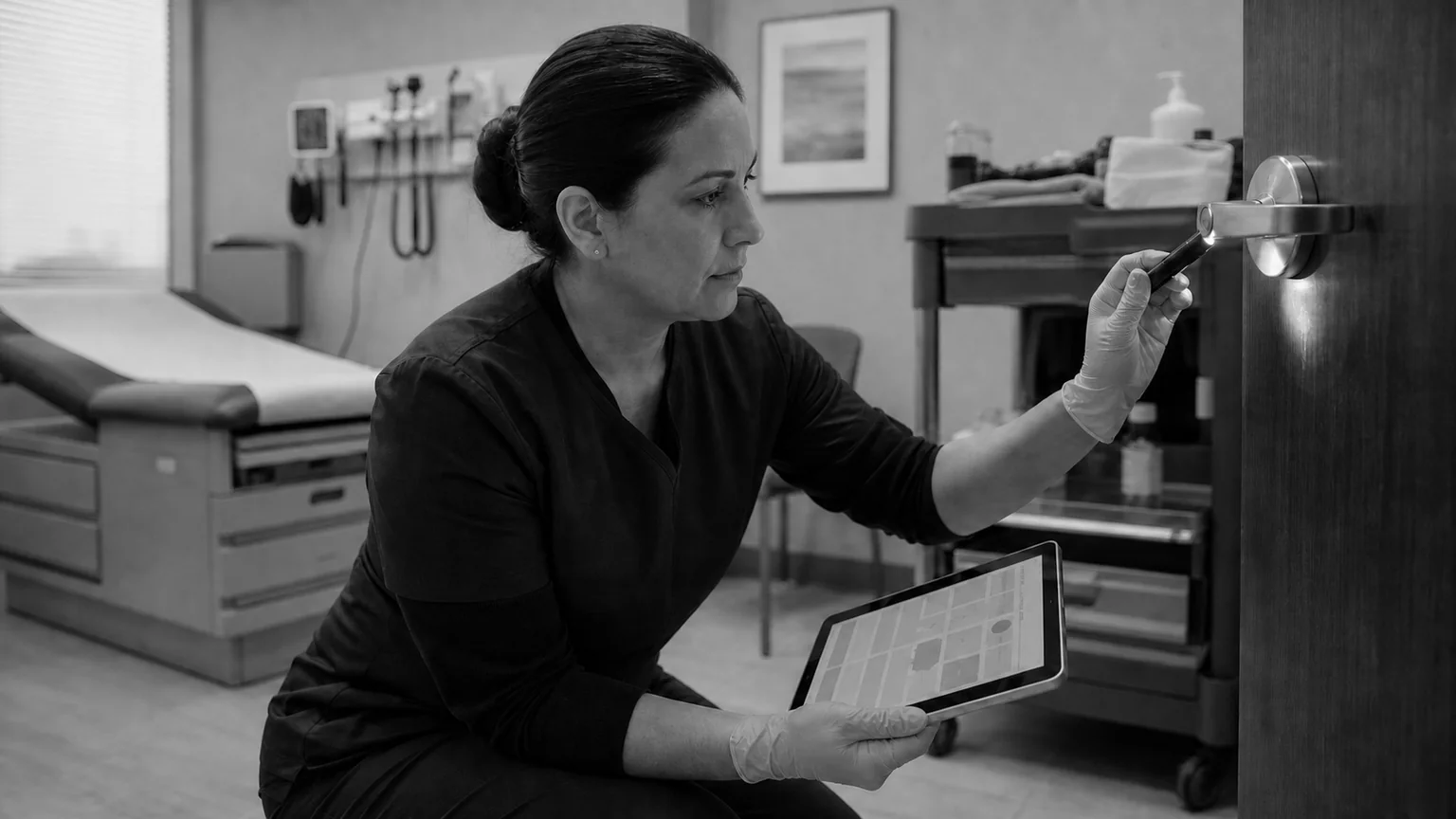
4. “If it looks clean, the room passed”
Why to question it: Visual inspection finds dust, debris, streaking, damage, and missing supplies. It does not prove every high-touch action or product step occurred.
Ask for layered quality control:
- cleaner route records;
- supervisor visual inspection;
- selected direct observation;
- rotating targeted monitoring where appropriate;
- issue reporting, corrective action, and trend review.
CDC’s environmental-cleaning program framework emphasizes monitoring and timely feedback alongside standardized procedures.
5. “Our checklist works in every clinic”
Why to question it: A useful schedule reflects room use, patient volume, touch frequency, contamination risk, equipment, products, facility policy, and clinical handoffs. A copied checklist may omit the facility’s highest-risk responsibility gap.
Ask to see:
- a room-by-room task matrix;
- named owners for clinical exclusions;
- service frequencies and triggers;
- approved products and label references;
- inspection and escalation fields;
- version and approval date.
Evidence checklist for vendor selection
| Claim | Evidence worth reviewing |
|---|---|
| Certified staff | Named credential, issuing body, scope, issue/expiration date |
| Registered disinfectants | Product label, EPA registration, intended use, training |
| Medical experience | Approved anonymized scope, reference, or relevant project example |
| Quality control | Sample inspection report and corrective-action workflow |
| Insurance | Current certificate and coverage relevant to the contract |
| Supplier-diversity status | Current official certificate or directory record |
| Fast response | Defined service level and historical tracking—not an absolute promise |
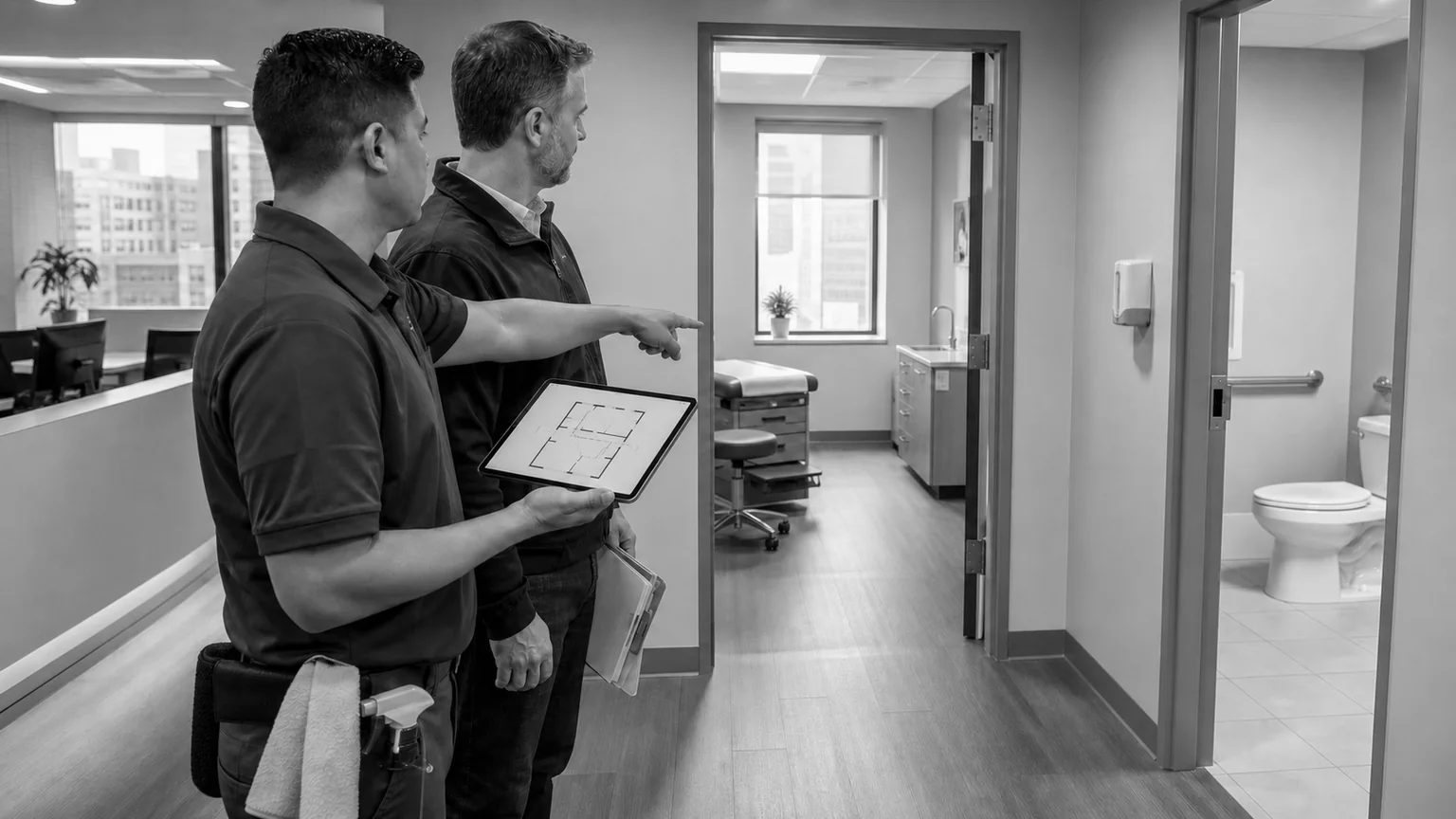
365 Spotless publicly displays current NYC and New York State M/WBE certificate artifacts and describes a walkthrough-assessment-proposal-reporting process. Those are concrete pieces of evidence, but they should be presented for what they establish: business certification and an operating workflow. They do not independently prove every health or performance claim.
Review the company’s medical-cleaning service and use a facility walkthrough to request claim-specific documents for the proposed scope.
Frequently asked questions
Does certification guarantee cleaning quality?
No. Verify what the certification covers, then separately evaluate staffing, training, procedures, supervision, reporting, and issue response.
Is “hospital grade” a complete purchasing specification?
No. The facility still needs the product identity, registered use, label directions, compatibility, and an executable application process.
What is the best sign of a credible medical-cleaning proposal?
A setting-specific scope that names tasks, owners, methods, exclusions, verification, evidence, and corrective action is more informative than absolute marketing language.