Dental Office Cleaning in NYC: Clinical and Public Zones
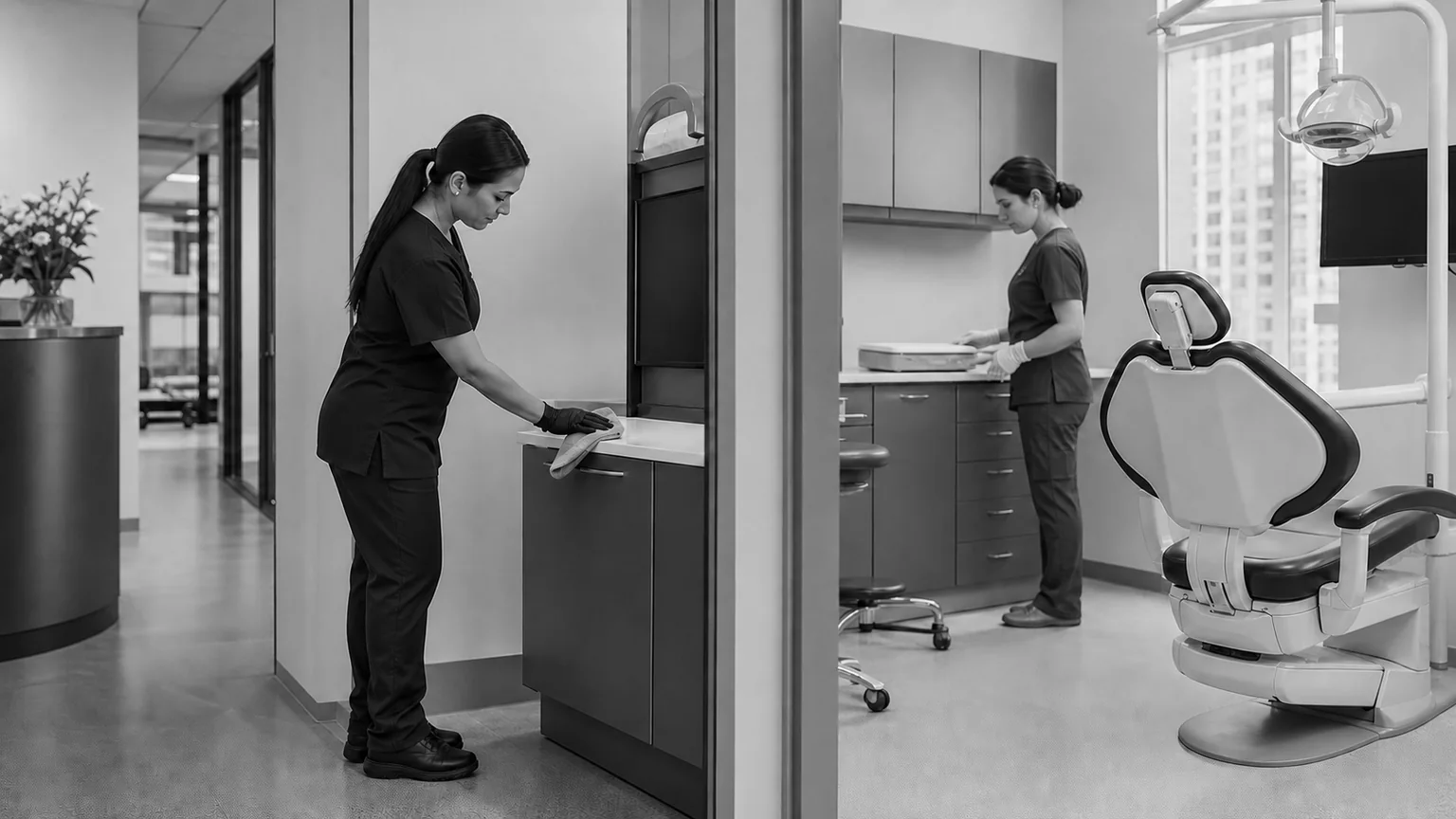
Dental offices combine reception areas, treatment rooms, sharps, instruments, patient-care equipment, staff spaces, and public restrooms. A safe cleaning scope must separate ordinary public-area cleaning, approved clinical environmental surfaces, and clinical device reprocessing. A commercial cleaner should never infer responsibility from proximity alone.
Divide the practice into responsibility zones
Zone 1: Public-facing spaces
Typical tasks may include floors, entry glass, reception surfaces, seating, corridors, and public restrooms. The schedule should still identify high-touch surfaces, electronic-device restrictions, daytime traffic, and consumable responsibilities.
Zone 2: Clinical environmental surfaces
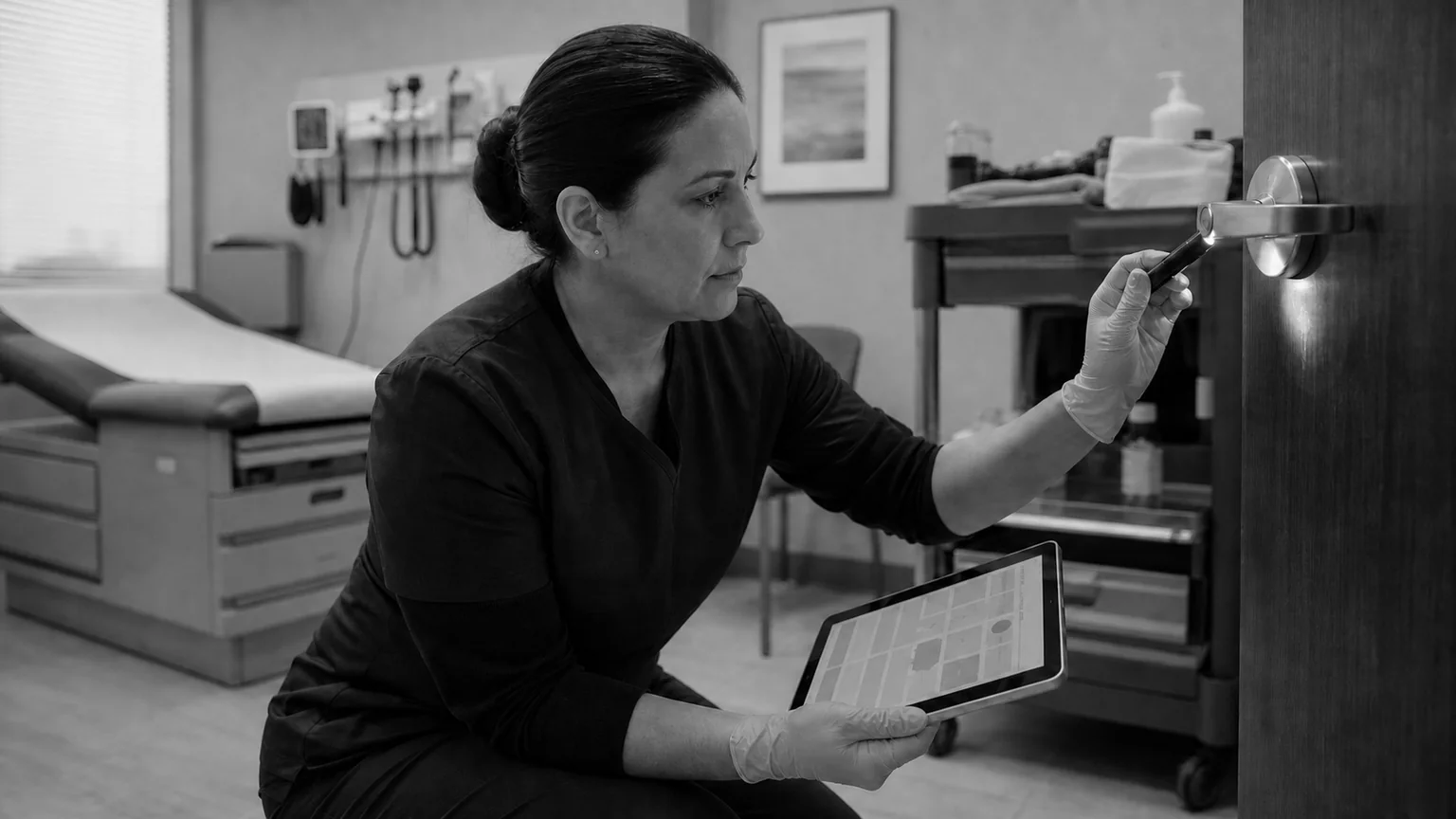
These are room surfaces around patient care that the facility has assigned to environmental services, such as approved floors, fixtures, door hardware, cabinet pulls, and work-surface exteriors. The practice should specify the method, product, timing, and any between-patient responsibilities.
The CDC’s Core Infection Prevention and Control Practices support risk-based environmental cleaning and disinfection, trained personnel, and monitoring in healthcare settings.
Zone 3: Clinical devices and reprocessing
Instruments, dental-unit components, reusable patient-care devices, medication areas, sterilization equipment, and sharps remain with trained clinical personnel unless a written, appropriate, manufacturer-aligned protocol assigns a particular task otherwise. “Wipe the operatory” is not a sufficient handoff.
Build a room matrix before pricing
| Area | Cleaning-team scope | Facility/clinical scope to clarify |
|---|---|---|
| Reception | Floors, approved furniture and touchpoints, waste | Check-in devices, records, and restricted drawers |
| Operatory | Approved environmental surfaces and floors | Instruments, patient-care devices, barriers, sharps, dental-unit procedures |
| Sterilization area | Only expressly approved environmental tasks | Instrument transport, cleaning, packaging, sterilization, and records |
| Laboratory | Approved floors and exterior surfaces | Materials, equipment, chemicals, and device-specific procedures |
| Staff room | Routine office/breakroom scope | Medications, clinical supplies, and restricted storage |
| Restroom | Fixtures, touchpoints, floors, consumables as contracted | Facility-specific exposure escalation |
The matrix should name a responsible role for every exclusion. Otherwise, each party may assume the other completed it.
Prevent cross-zone transfer
Use a facility-approved system for:
- clearly identified restroom and clinical-area tools;
- clean-to-dirty work sequence;
- glove changes and hand hygiene;
- reusable-tool cleaning and storage;
- waste routes that avoid clean supply areas;
- isolation of contaminated or damaged equipment;
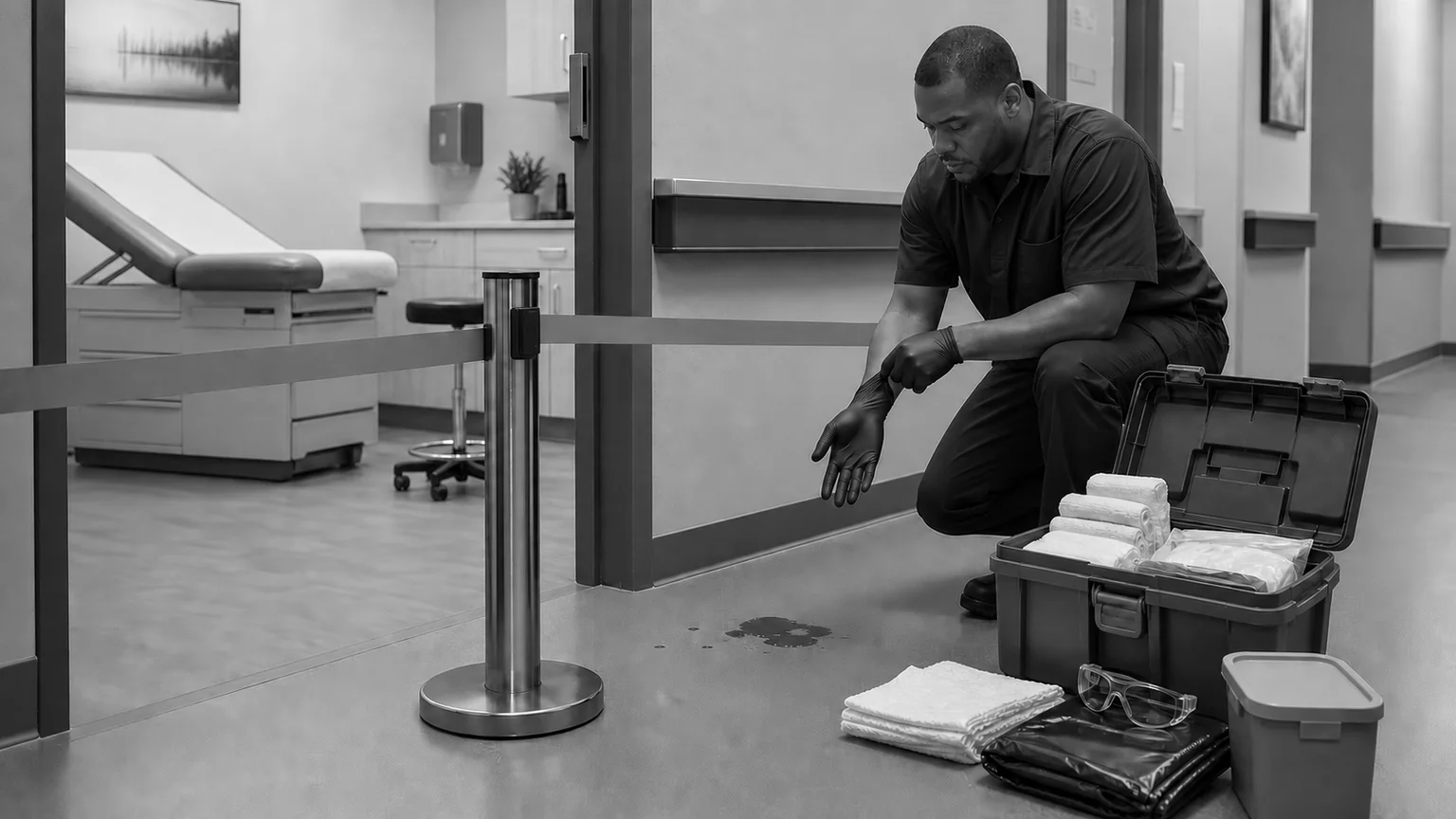
- escalation when sharps, blood, or unsecured clinical materials are found.
Where workers may have occupational exposure, OSHA’s Bloodborne Pathogens housekeeping guidance should be considered within the facility’s exposure-control program.
Confirm product and equipment compatibility
The strongest disinfectant is not automatically the right choice. Record the EPA registration, intended use, current label, wet contact time, and surface restrictions. Check dental-chair upholstery, screens, controls, acrylic barriers, flooring, and equipment against manufacturer instructions.
CDC’s environmental infection-control recommendations support using appropriate registered products according to instructions. They do not authorize cleaners to improvise on sensitive devices.
Plan around patient care and NYC building access
After-hours dental cleaning may involve elevators, keys, alarm codes, restricted rooms, waste staging, noise rules, and limited freight access. The schedule should include:
- the last patient and clinical closeout time;
- when operatories are released for cleaning;
- access and alarm contacts;
- rooms that remain locked;
- supply and waste routes;
- drying or contact time before reopening;
- a completion report and issue-escalation method.
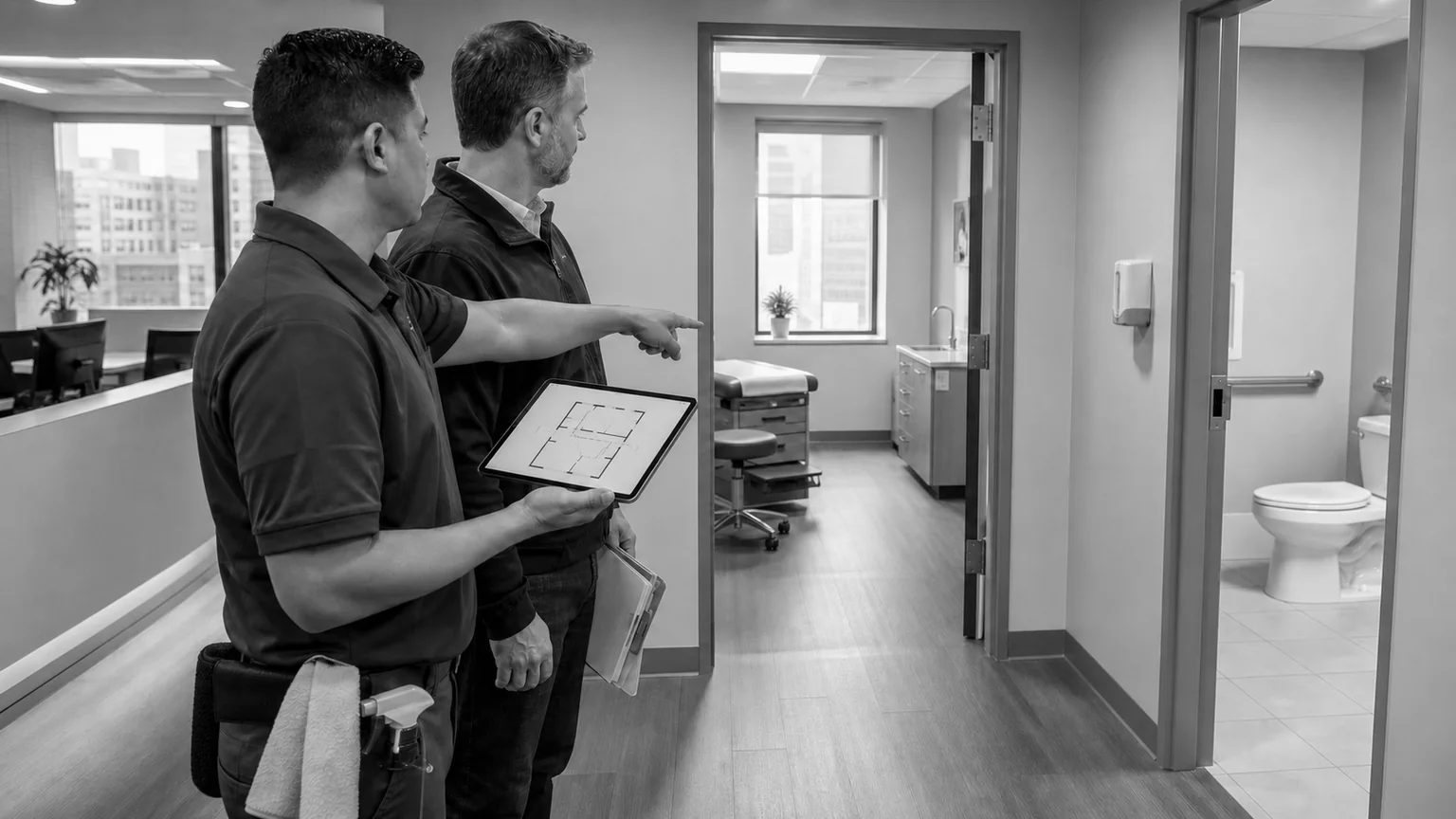
365 Spotless serves medical and dental facilities across NYC and publicly uses a walkthrough-assessment-proposal workflow. Use that walkthrough to define room zones and handoffs before a monthly price is issued. Review medical and dental cleaning services or schedule a walkthrough.
Questions for a dental-cleaning walkthrough
- Which rooms turn over between patients, and who performs that turnover?
- Which surfaces belong to clinical staff?
- Where may cleaners never move equipment or supplies?
- How are unsecured sharps or exposure hazards escalated?
- Which products are compatible with chairs, screens, and controls?
- How are tools separated between restrooms and treatment zones?
- What report confirms completion and exceptions?
Frequently asked questions
Can an office-cleaning checklist be reused for a dental practice?
Only for genuinely comparable public and administrative areas. Treatment spaces require a dental-practice-specific responsibility matrix and approved environmental procedures.
Should cleaners handle dental instruments?
Not as a default janitorial task. Instrument reprocessing belongs to appropriately trained clinical personnel following facility policy and manufacturer instructions.
Is overnight cleaning suitable for a dental office?
It can be, provided the practice establishes clinical closeout, access, restricted zones, products, safety handoffs, and reporting before service begins.