Medical Cleaning Quality Control: A Practical Monitoring Framework
Medical cleaning quality control should answer two questions: Was the agreed work completed, and was the approved process followed? No single test answers both. A reliable program combines route records, visual inspection, direct observation, targeted monitoring, feedback, and corrective action.
CDC’s environmental-cleaning program framework emphasizes standardized protocols, trained personnel, monitoring, and prompt feedback. The purpose is to improve performance—not to collect checkmarks without action.
What each quality-control method can show
| Method | Useful for | Does not prove |
|---|---|---|
| Route checklist | Whether assigned tasks were recorded as completed | Correct technique or absence of contamination |
| Visual inspection | Dust, debris, streaking, spills, damage, and depleted supplies | That every high-touch surface was wiped or disinfected correctly |
| Direct observation | Sequence, PPE, tool handling, product use, and contact-time technique | Performance on every unobserved shift |
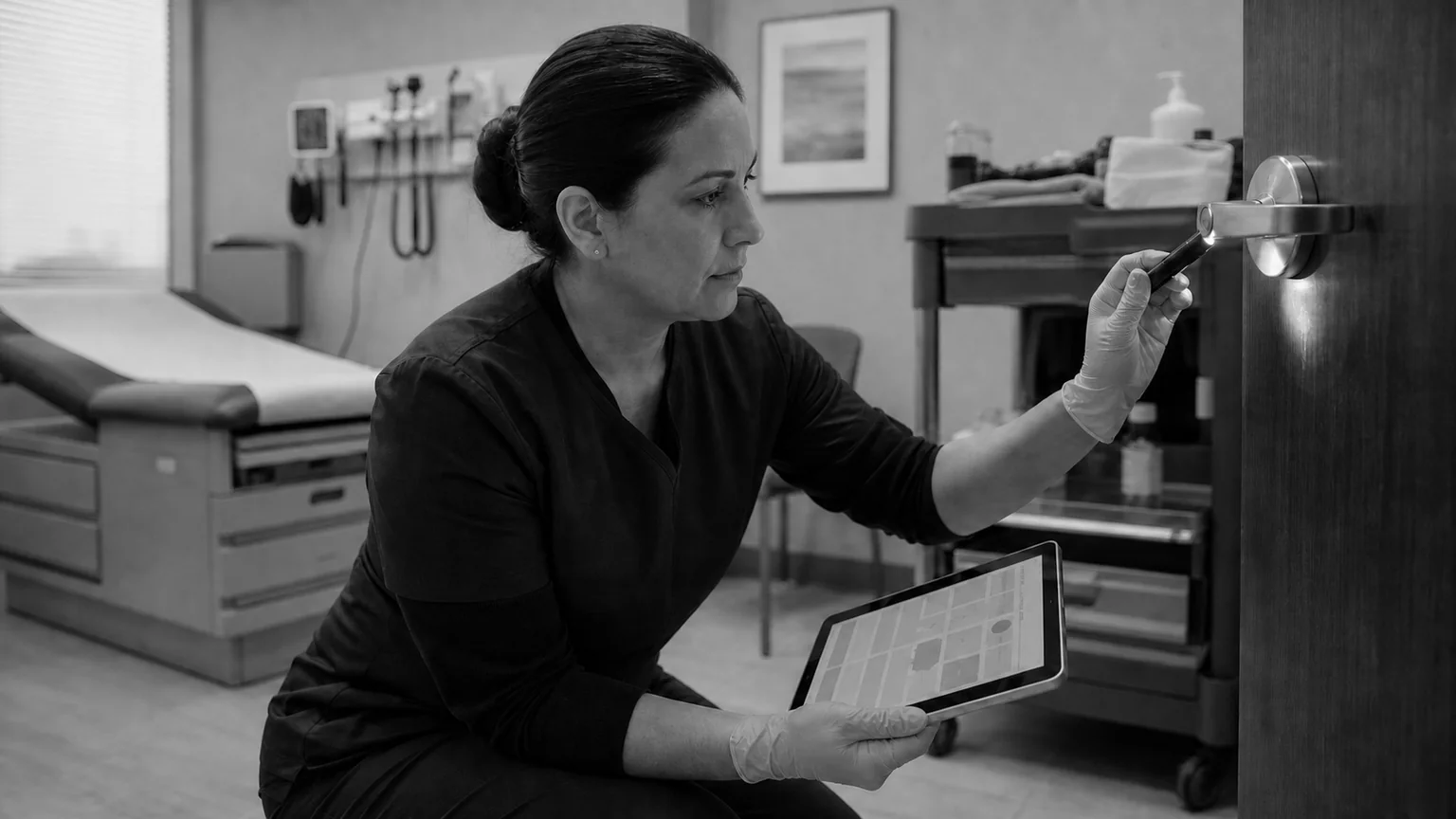
| Fluorescent marker | Whether selected marked surfaces were physically contacted | Microbial reduction or correct disinfectant use |
| ATP measurement | Rapid indication of residual organic material under a defined local method | Presence or absence of a specific pathogen |
| Complaint and issue log | Patterns by room, task, timing, and response | A complete measure of all cleaning outcomes |
Avoid turning a method into a claim it cannot support. For example, an attractive room can still contain missed high-touch tasks, and a single ATP reading is not a pathogen test.
Start with the agreed scope
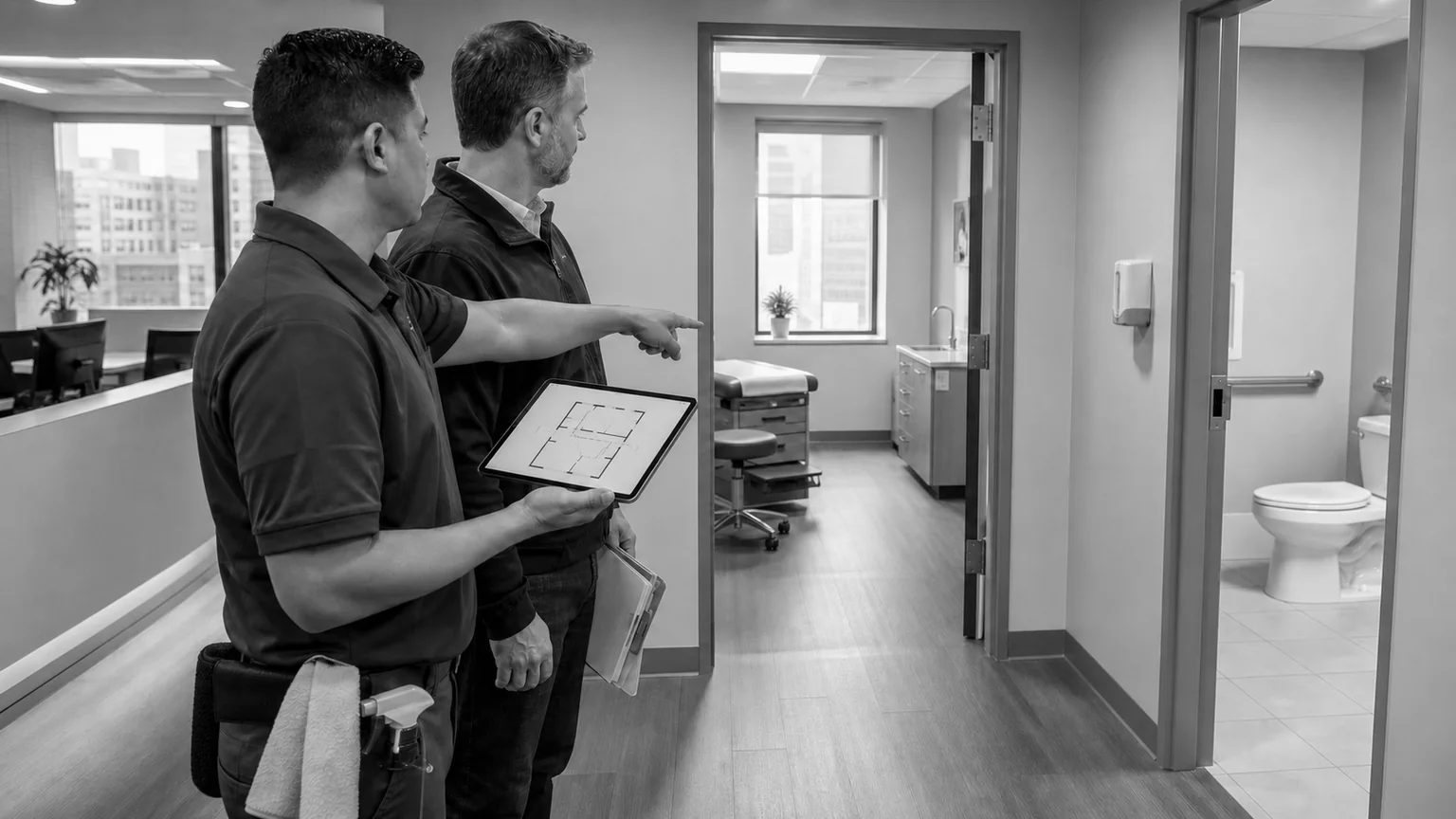
Quality cannot be measured against vague language. The contract or room matrix should define:
- rooms, surfaces, tasks, and frequencies;
- approved products and methods;
- clinical exclusions and handoffs;
- service windows and access conditions;
- inspection sample and cadence;
- acceptance criteria;
- issue priority and response pathway;
- required completion and trend reports.
If the client expects a task that never appeared in the scope, treat that as a scope correction—not a hidden inspection failure.
Use a layered monitoring plan
Every shift
Cleaners complete route records and escalate spills, damage, access problems, product shortages, unsecured sharps, and excluded tasks.
Supervisor review
Supervisors inspect a rotating sample of rooms and surfaces, review exceptions, and observe selected procedures. Rotating the sample reduces the temptation to prepare only the same visible locations.
Facility review
The clinic and vendor examine trends by room, surface, task, shift, and issue type. They decide whether the response is coaching, supply relocation, revised instructions, schedule changes, added labor, maintenance referral, or a formal corrective action.
Build a corrective-action loop
Use five steps:
- Record the finding with time, location, task, and evidence.
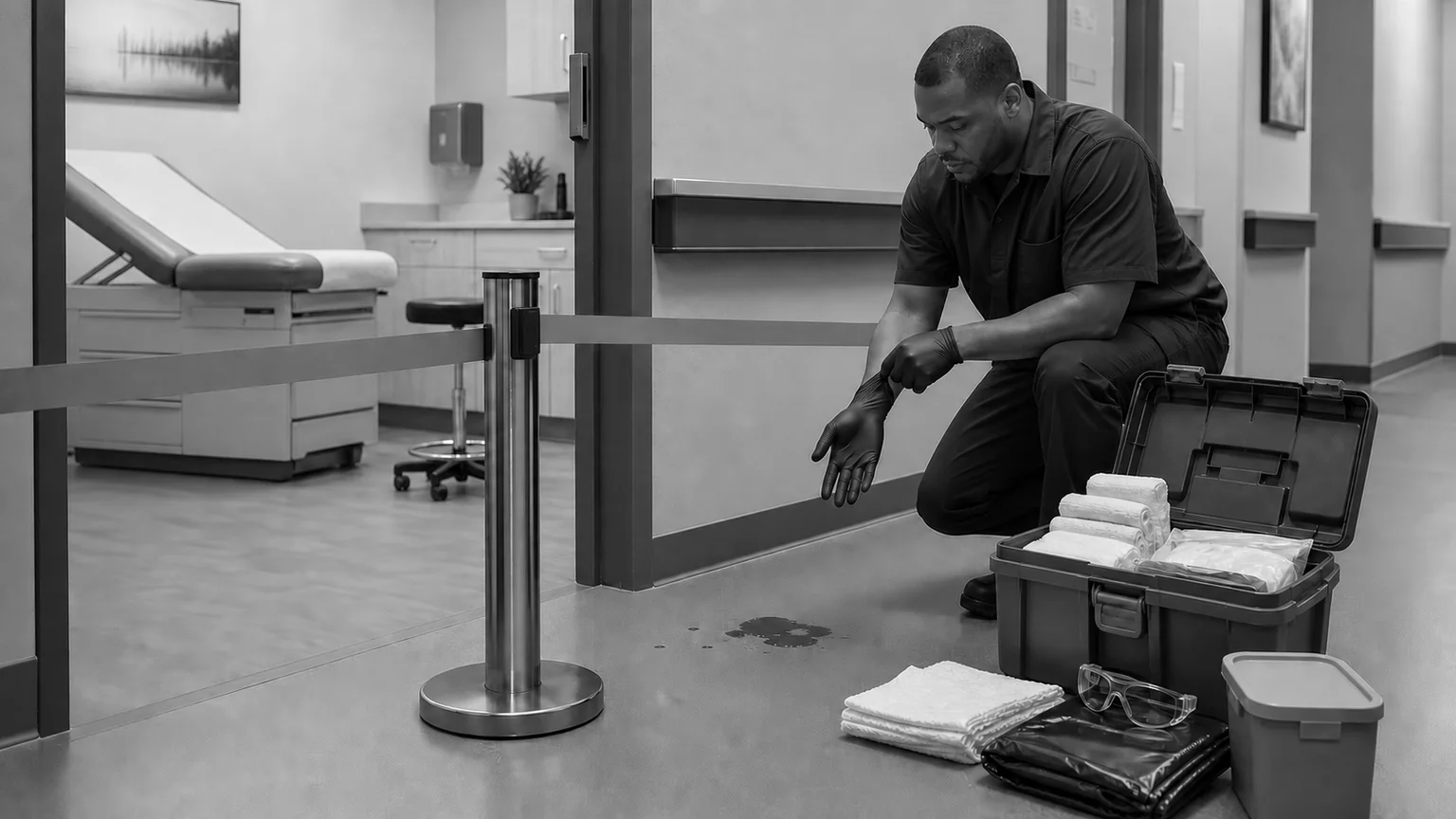
- Contain immediate risk according to facility policy.
- Identify the contributing condition rather than automatically blaming the last cleaner.
- Correct and verify the task, instruction, supply, staffing, or handoff.
- Trend recurrence to determine whether the fix worked.
Repeated misses may reveal an unrealistic route, confusing ownership, insufficient contact time, incompatible tools, locked rooms, or delayed maintenance.
Make reporting useful to facility managers
A concise monthly report can show:
- inspections completed versus planned;
- findings by category and location;
- average and maximum issue-response time;
- repeated issues and corrective actions;
- access or supply constraints;
- scope changes awaiting approval;
- training or coaching completed.
365 Spotless publicly states that its team cleans to standard and reports back. Its homepage also displays a client example in which a missed refrigerator-cleaning request was corrected within hours. That example is useful because it shows the full quality loop: identify, communicate, correct, and confirm—not because one response proves performance everywhere.
Discuss inspection and reporting expectations during a 365 Spotless medical-cleaning walkthrough or review the medical-cleaning service.
Frequently asked questions
Is visual inspection enough for a medical office?
Usually not as the only control. It is effective for visible conditions but should be combined with process observation, targeted monitoring, and feedback appropriate to the facility.
Does ATP testing prove a surface is pathogen-free?
No. ATP indicates biological residue under the chosen method; it does not identify a particular organism or establish sterility.
Who should receive quality reports?
The contract should name the vendor and facility recipients, including the person authorized to approve scope or protocol changes.