High-Touch Surface Checklist for Outpatient Clinics
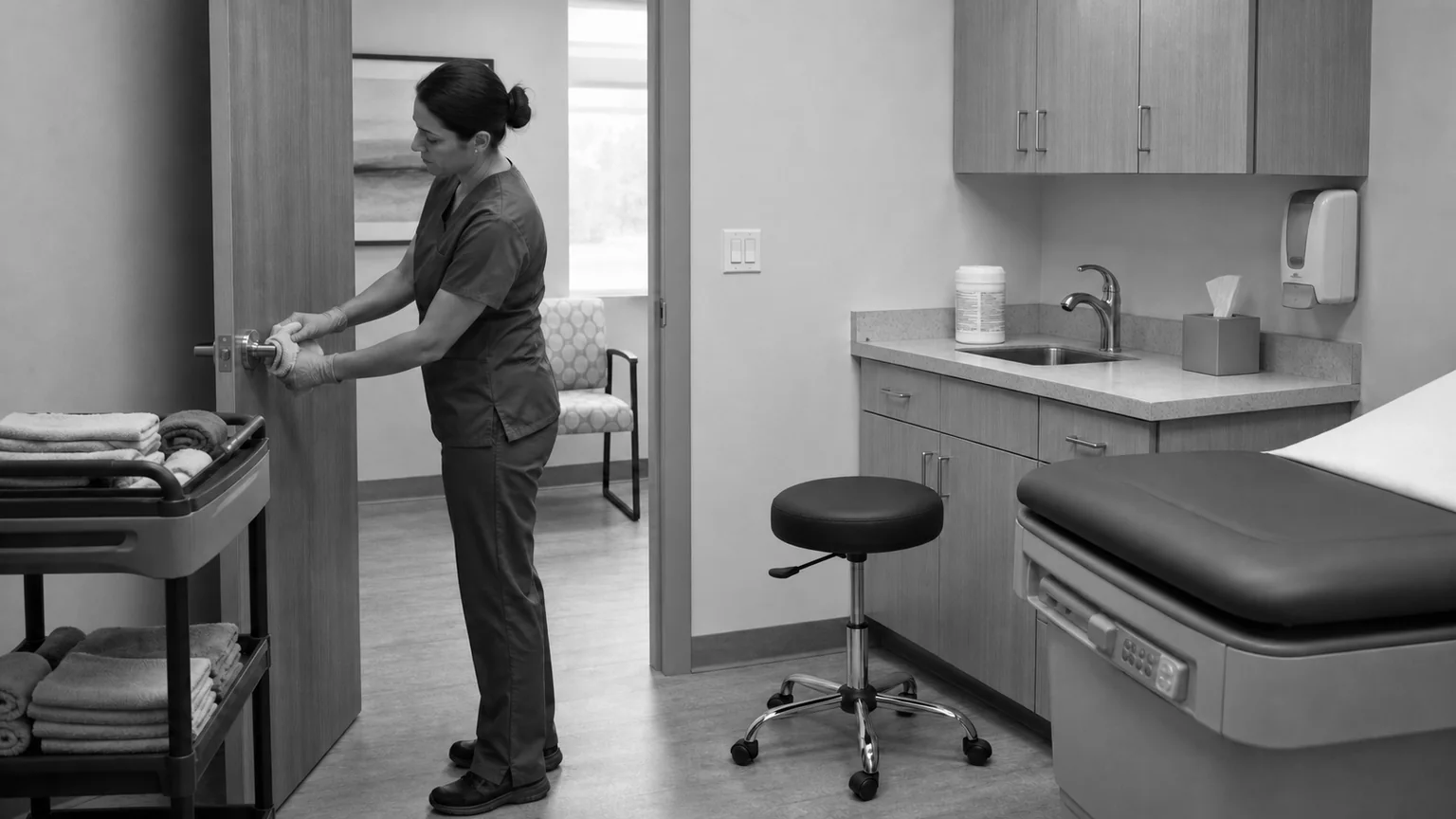
A useful high-touch checklist does more than name door handles. It identifies the exact surface, room, responsible role, approved method, frequency, and verification step. The clinic must approve the final list because patient volume, procedures, equipment, and infection-prevention policies differ by facility.
The CDC’s core infection-control practices support more frequent cleaning and disinfection of high-touch environmental surfaces than low-touch surfaces. The checklist below is a scoping tool—not a universal clinical protocol.
1. Entry, reception, and waiting areas
Review these touchpoints during occupied and quiet periods:
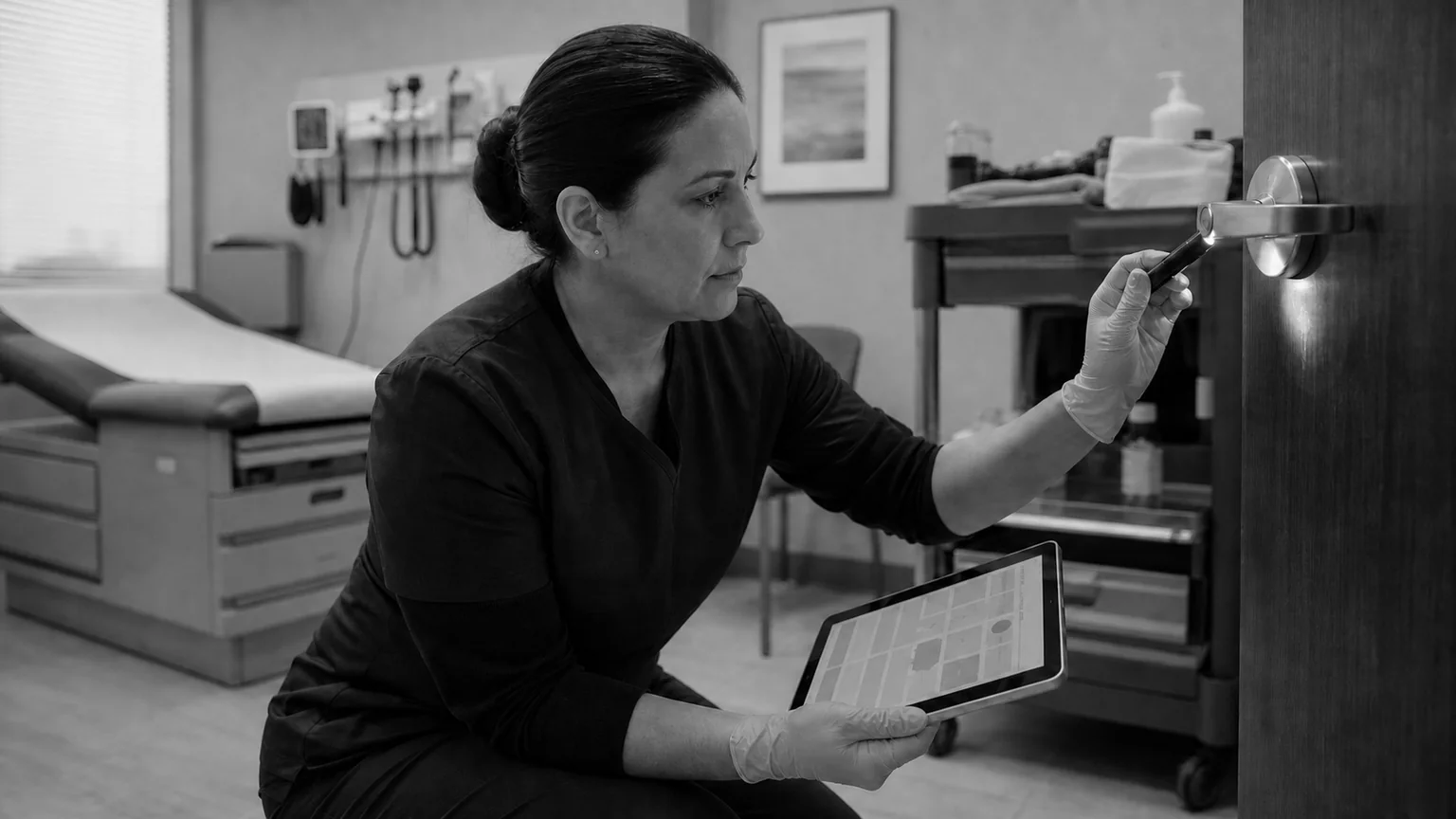
- exterior and interior door handles;
- intercom, elevator, and access-control buttons;
- check-in screens, pens, clipboards, and counter edges;
- chair arms and mobility-aid contact areas;
- light switches and thermostat covers;
- shared payment devices;
- restroom handles and dispensers near the waiting area.
Do not assume every electronic device tolerates the standard product. Record manufacturer restrictions and assign shared tablets or payment terminals to an approved role.
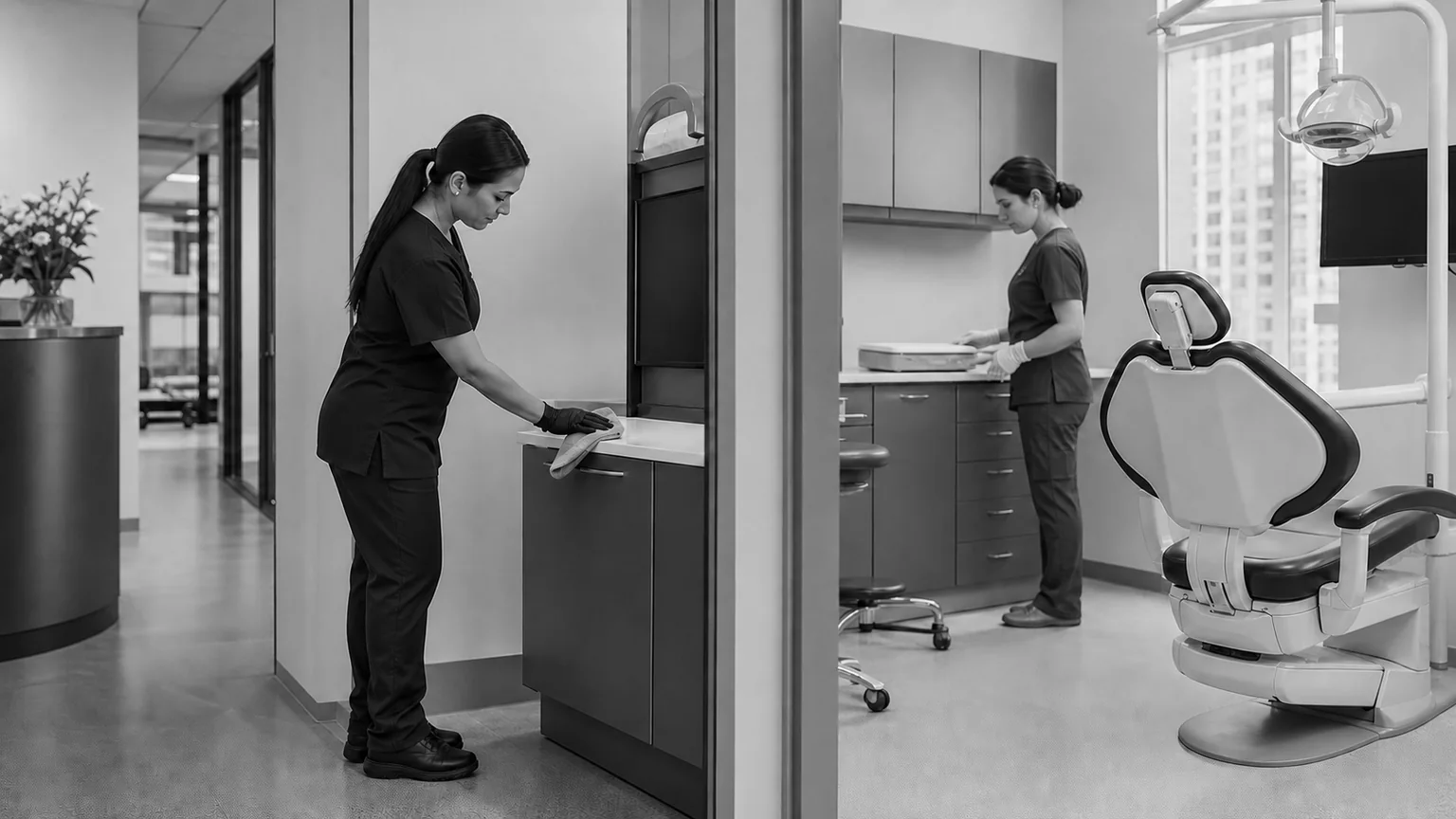
2. Exam and treatment rooms
Potential environmental touchpoints include:
- door hardware and privacy-curtain edges;
- exam-table controls and approved exterior surfaces;
- light switches and task-light handles;
- stool adjustment controls;
- drawer and cabinet pulls;
- work-surface edges;
- sink handles, soap dispensers, and paper-towel dispensers;
- noncritical equipment surfaces specifically assigned to environmental services.
Clinical instruments, reusable devices, medication areas, sharps, and patient-care equipment require explicit ownership. A janitorial checklist should never blur environmental cleaning with clinical reprocessing.
3. Staff, utility, and shared spaces
Commonly overlooked touchpoints can include:
- breakroom refrigerator and microwave handles;
- coffee-station controls;
- shared keyboard and telephone surfaces where approved;
- supply-room handles;
- utility-room switches and cart handles;
- cleaning-closet door hardware, dilution controls, and dispensers;
- staff restroom fixtures.
These areas matter because tools and hands move between zones. The scope should define hand hygiene, glove changes, tool separation, and the sequence of work.
4. Restrooms
Map at least:
- entry handles and privacy locks;
- faucet and flush controls;
- toilet and urinal contact points;
- grab bars;
- soap, tissue, sanitary-product, and towel dispensers;
- baby-changing stations if present;
- counter edges and waste-bin touchpoints.
Restroom tools should be clearly identified and managed so they are not carried into treatment or food areas without the required cleaning or reprocessing.
Turn the inventory into an auditable schedule
For every selected surface, complete these fields:
| Field | Decision to record |
|---|---|
| Location | Exact room and surface—not “entire clinic” |
| Owner | Cleaning team, clinical team, facilities, or another named role |
| Method | Clean, clean then disinfect, or another approved procedure |
| Product | Approved product and current label reference |
| Frequency | Between patients, per shift, daily, or triggered by soil/event |
| Safety | PPE, access restrictions, and exposure controls |
| Verification | Checklist, observation, rotating marker audit, or supervisor review |
CDC’s environmental-cleaning program framework emphasizes standardized protocols, trained personnel, monitoring, and feedback. A checked box is useful only when the task and acceptance criteria are clear.
Set frequency by evidence—not guesswork
Adjust the schedule for:
- patient volume and turnover;
- room function and procedures;
- observed soiling or spills;
- touch frequency;
- outbreak or illness conditions;
- product-label limitations;
- facility infection-prevention policy;
- staffing and access windows.
If the schedule cannot be completed within the available service window, change the scope, frequency, staffing, or handoff. Do not preserve an unrealistic checklist merely because it looks comprehensive.
Audit a rotating sample
A supervisor can review a different subset of surfaces each visit, observe technique, and record misses by room and task. The response should be prompt coaching and process correction. Repeated failures may indicate confusing ownership, poor supply placement, incompatible contact times, or insufficient labor—not simply inattentive staff.
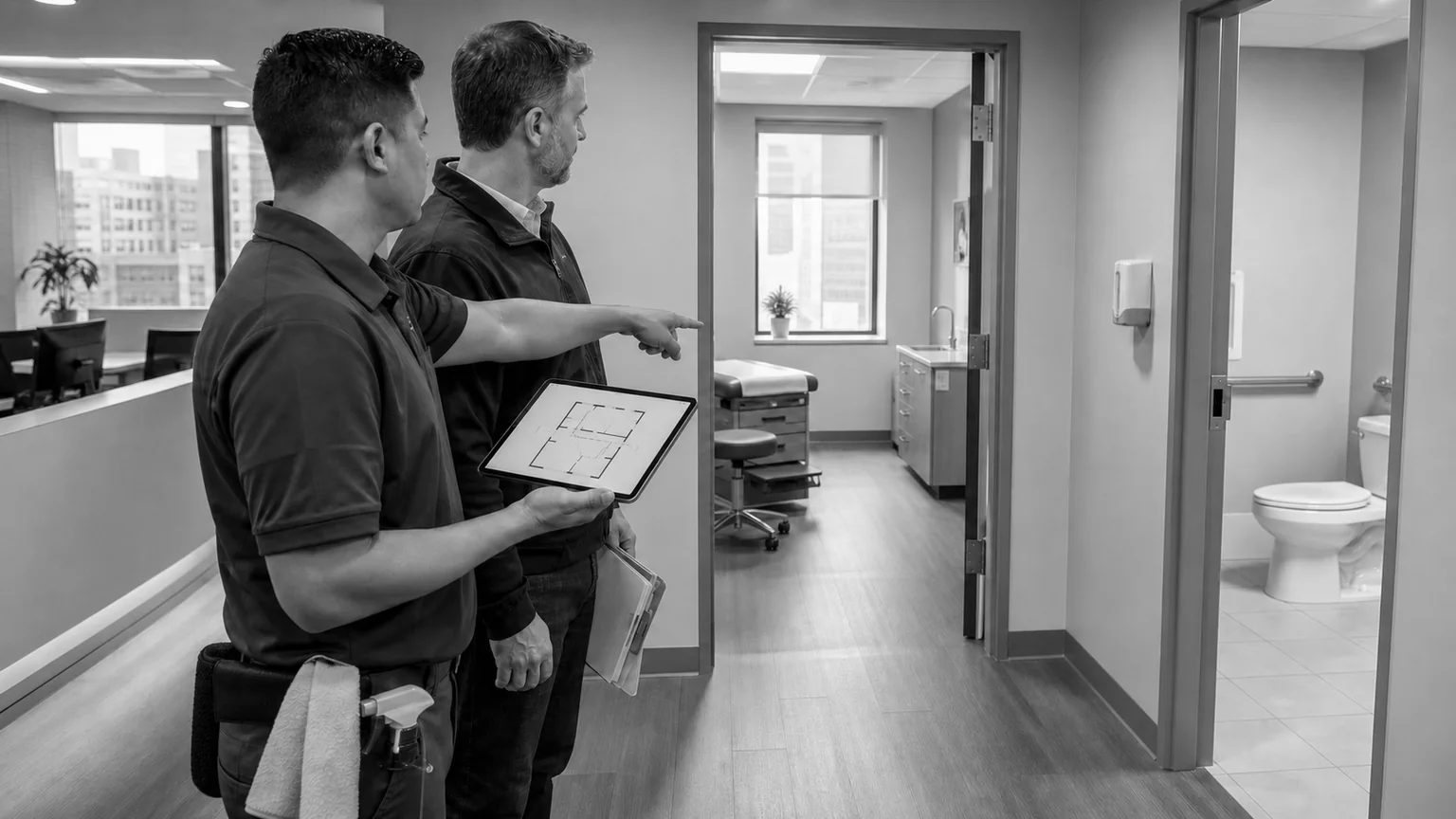
During a 365 Spotless walkthrough, the clinic can turn this inventory into a room matrix, define exclusions, and agree on reporting. Learn about medical-office cleaning in NYC or request a walkthrough.
Frequently asked questions
Is a high-touch checklist the same for every clinic?
No. Use, equipment, procedures, patient flow, and facility policy change the final inventory and frequency.
Who should approve the checklist?
The facility’s designated infection-prevention, safety, or clinical authority should approve environmental responsibilities. The cleaning contractor should confirm that the assigned work is clear, feasible, and supported by training and supplies.
Should walls appear on the checklist?
Walls and other low-touch surfaces may belong in the broader room schedule, but they usually require a different frequency from frequently touched surfaces unless visibly soiled or otherwise covered by facility policy.