Disinfectant Contact Time: What Medical Offices Need to Verify
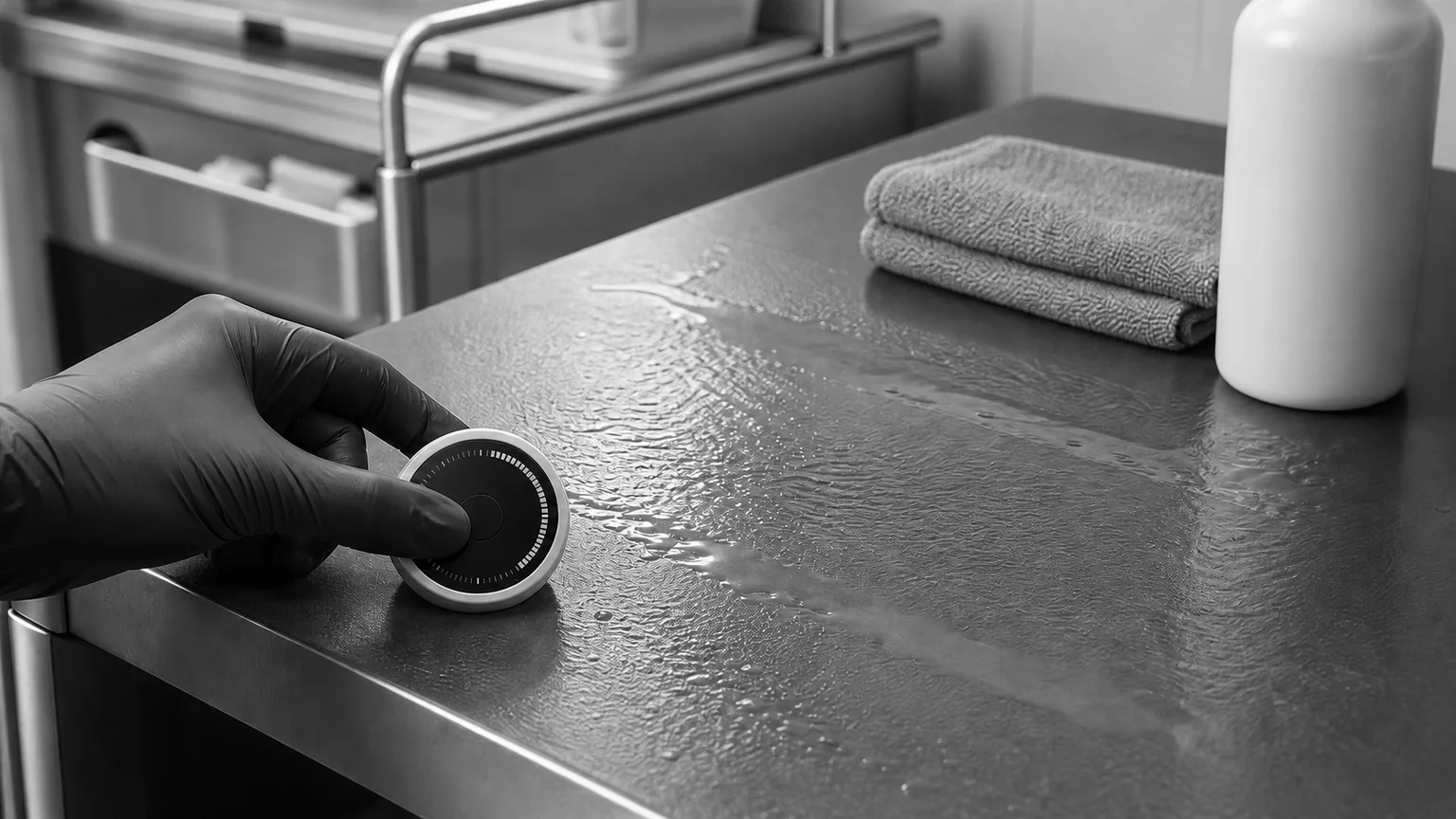
Disinfectant contact time is the period a treated surface must remain visibly wet when the product label requires it. The correct time is not universal. It can vary by product, by target organism, by use site, and by application method. A medical office should therefore train and audit against the exact current label, not against a number remembered from another product.
Why contact time matters
EPA registration ties a disinfectant’s claims to the directions printed on its label. If a surface dries too soon, if it was not cleaned first when the label calls for that, or if the dilution is wrong, the completed task may not match the labeled use.
CDC’s environmental infection control recommendations direct healthcare facilities to use a product registered with the EPA and to follow its instructions. The label can address:
- organisms covered by the claim;
- concentration, or whether the product is ready to use;
- any cleaning required before the product is applied;
- application method and wet contact time;
- surface compatibility;
- PPE, ventilation, storage, and disposal.
Common reasons a surface dries too soon
The route is rushed
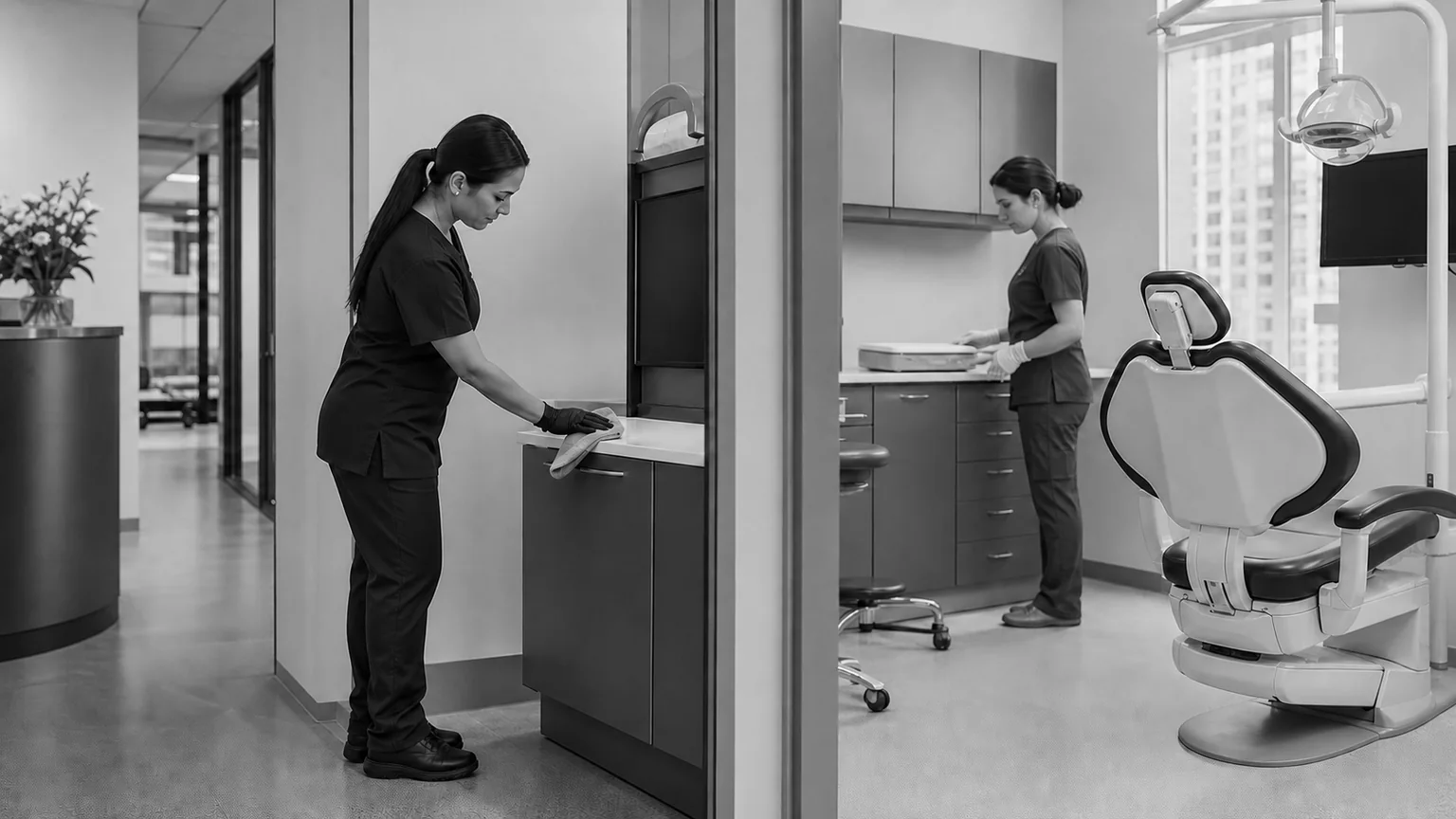
When the task list assumes instant spray and wipe work, staff may move too quickly to keep the surface wet for the required period.
The wrong applicator is used
A wipe may be too dry, too small for the area, or incompatible with the chosen chemical. Repeatedly dipping or reusing materials can also conflict with the approved procedure.
The surface was not prepared
Visible soil and organic material can interfere with disinfection. Follow the label and the facility procedure for cleaning a surface before disinfectant is applied.
Staff rely on a nickname
“Hospital grade,” a brand color, or a bottle shape does not identify the relevant organism claim. Keep the product name, EPA registration number, current label, and safety data sheet available.
The environment changes the application
Large, warm, porous, damaged, or vertical surfaces may not behave like a small demonstration area. Confirm that the use site is permitted and that the method is practical.
Build a contact time control into the scope
Use a simple verification sequence:
- Approve the product. Record its full name, EPA registration number, intended use, and label version.
- Map it to surfaces. Confirm material compatibility and any restriction set by the equipment manufacturer.
- Write the method. State whether the surface must be cleaned first, and how the product is applied.
- Plan the route. Sequence tasks so the required wet period can occur without unsafe shortcuts.
- Train by demonstration. Staff should show the complete process with the actual product and tools.
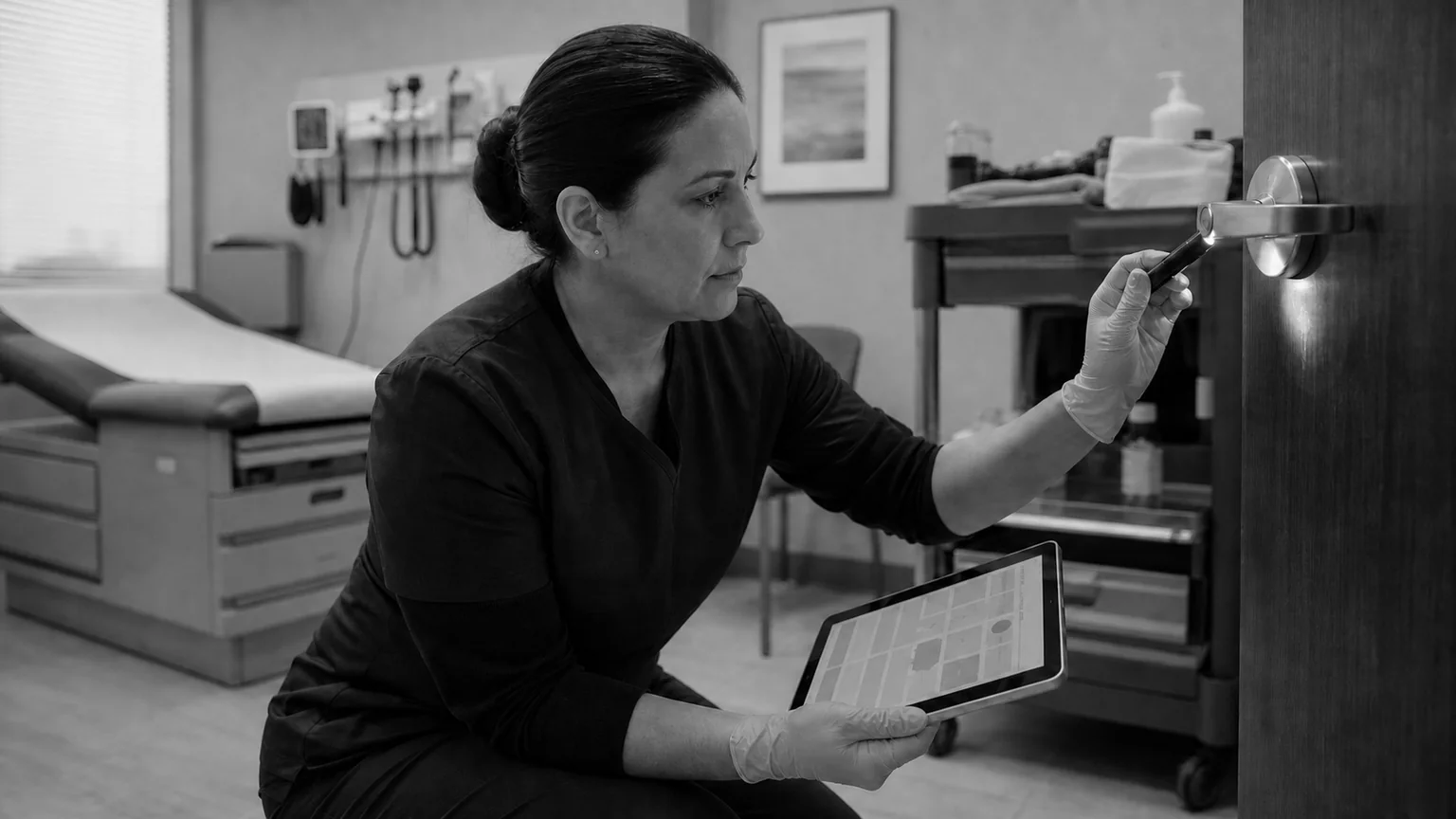
- Observe periodically. A supervisor should verify preparation, application, wetness, PPE, and tool management.
- Correct the system. If the method is impractical, change the product, supplies, labor allowance, or scope through the facility’s approval process.
Questions to ask a cleaning vendor
| Question | What a useful answer includes |
|---|---|
| What is the contact time? | The exact label direction for the intended organism and use site, rather than a generic number |
| How do cleaners know it? | Training on that exact product, plus labels the team can reach |
| How is wetness maintained? | A demonstrated application method and a realistic route |
| What if the surface is incompatible? | Escalation and an approved alternative, never improvisation |
| How is the process checked? | Observation, documented coaching, and corrective action |
The CDC’s Core Infection Prevention and Control Practices also emphasize staff training and performance monitoring. Buying a suitable product is only one part of a reliable program.
Use the walkthrough to test feasibility
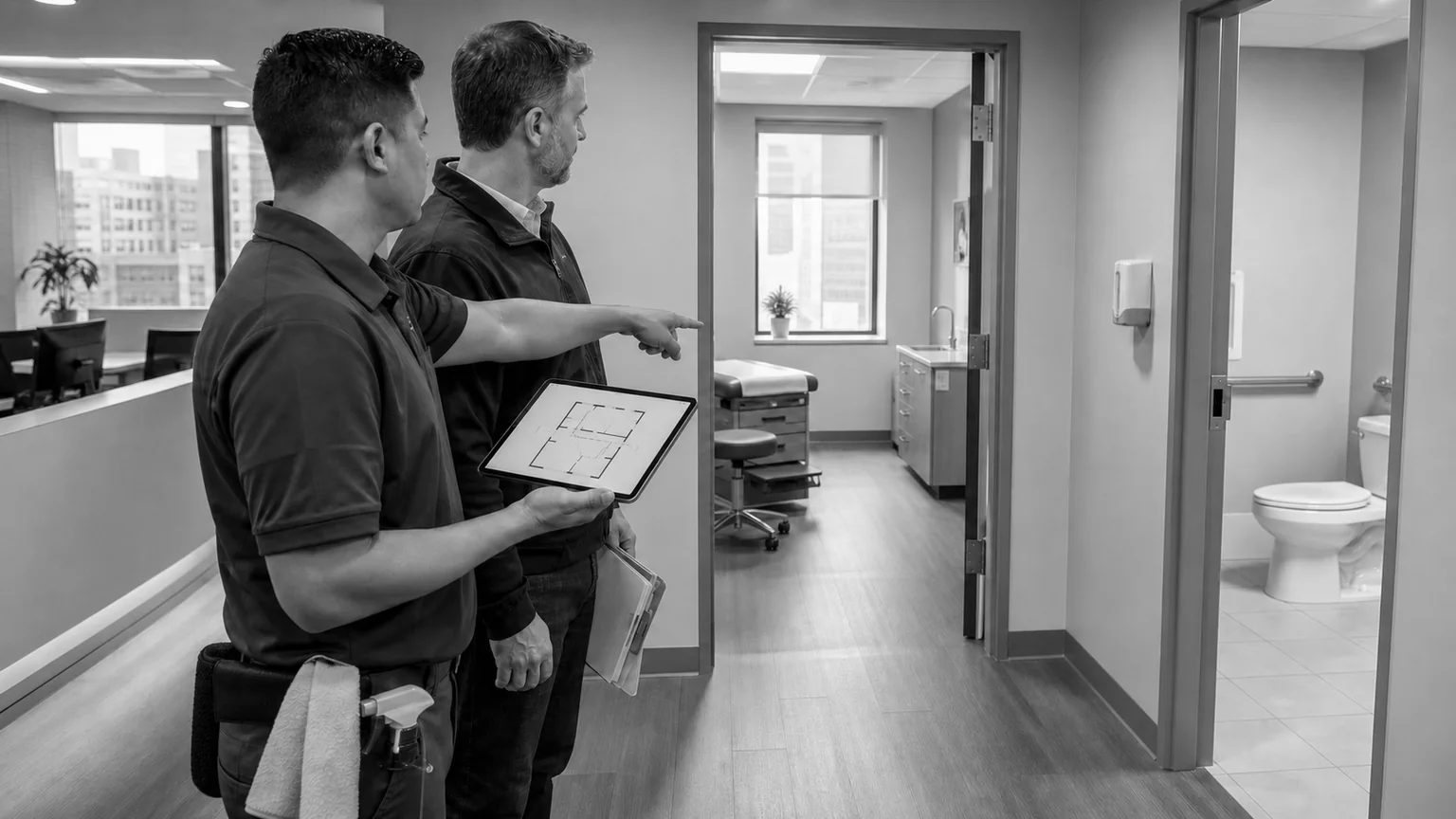
During a 365 Spotless walkthrough, the facility can identify approved products, surface restrictions, service windows, clinical exclusions, and verification expectations before the scope is priced. See 365 Spotless medical cleaning services or schedule a walkthrough.
Frequently asked questions
Is dwell time the same as contact time?
People often use the two terms interchangeably, but the controlling language is the current product label. Record and teach the exact instruction that label gives.
Can staff wipe the surface before the contact time ends?
Only if the label permits that process. Otherwise, early wiping may mean the labeled contact condition was never achieved.
Does a longer contact time always work better?
Do not invent a longer or stronger application. Follow the label, the facility procedure, and the instructions from the surface manufacturer.