Cleaning vs. Disinfecting in a Medical Office: An NYC Facility Guide
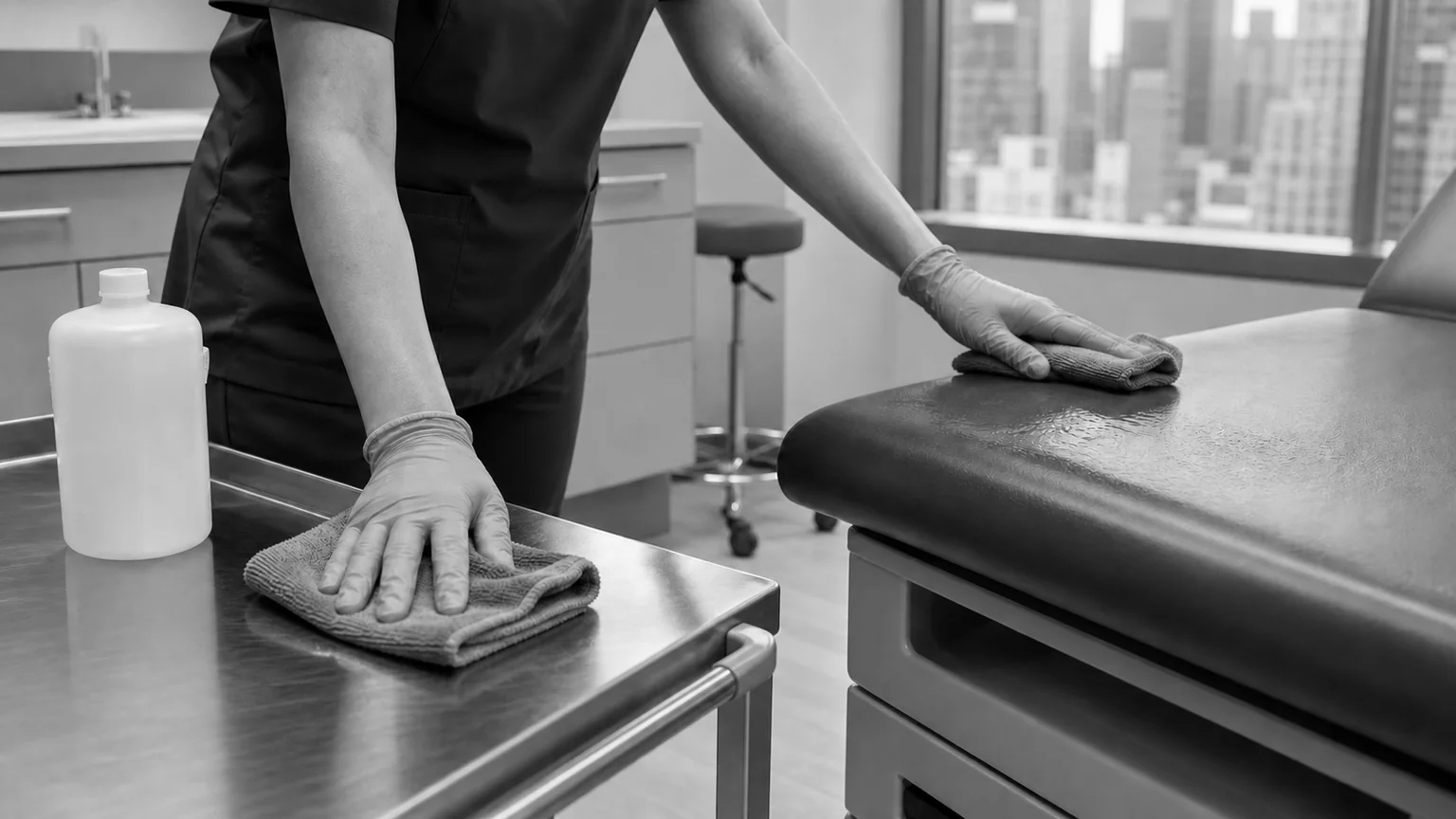
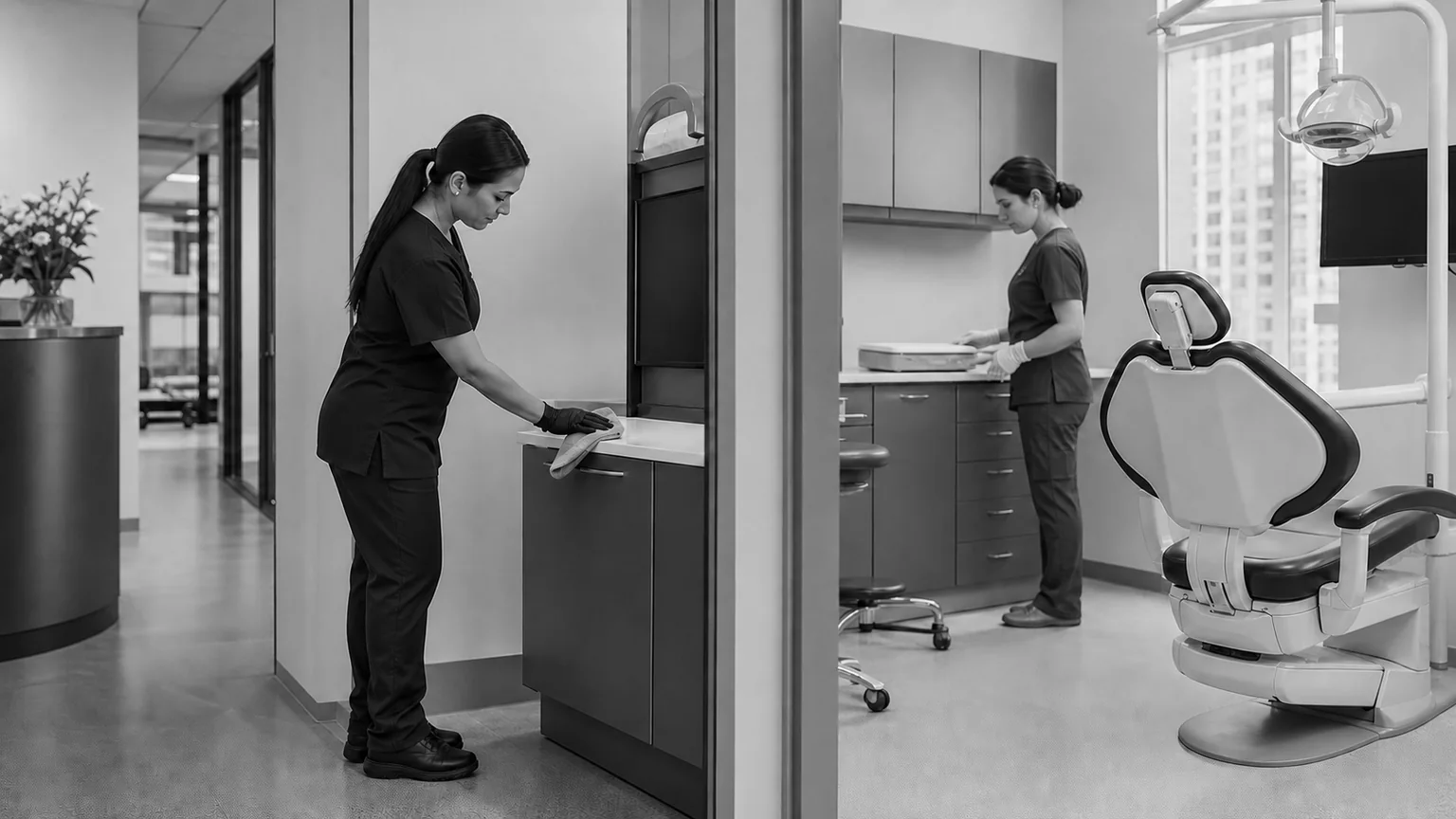
Cleaning removes soil and organic material. Disinfecting uses an appropriate registered product to inactivate specified microorganisms on a surface. In a medical office, the right process is usually not “disinfect everything.” It is a written, risk-based plan that identifies which surfaces need cleaning, which need cleaning followed by disinfection, how often the work occurs, and who is responsible.
That distinction matters because visible cleanliness, product selection, contact time, surface compatibility, and staff responsibilities all affect whether the procedure can be carried out correctly.
Cleaning and disinfecting are different jobs
| Action | Main purpose | Typical medical-office application |
|---|---|---|
| Cleaning | Removes dirt, spills, and organic material | Floors, low-touch surfaces, visible soil, and preparation before disinfection when required |
| Disinfecting | Inactivates microorganisms listed on the product label | Approved high-touch and near-patient environmental surfaces based on facility policy |
| Sterilizing | Destroys all forms of microbial life through a validated process | Clinical instruments and devices—not routine janitorial treatment of rooms |
The CDC’s Core Infection Prevention and Control Practices include environmental cleaning and disinfection within Standard Precautions and call for procedures appropriate to the care environment. The facility’s infection-prevention lead should translate that guidance into a site-specific policy.
Decide by room, surface, and risk
A useful scope considers four questions:
- How is the room used? A waiting room, exam room, staff kitchen, and utility area do not have identical risks.
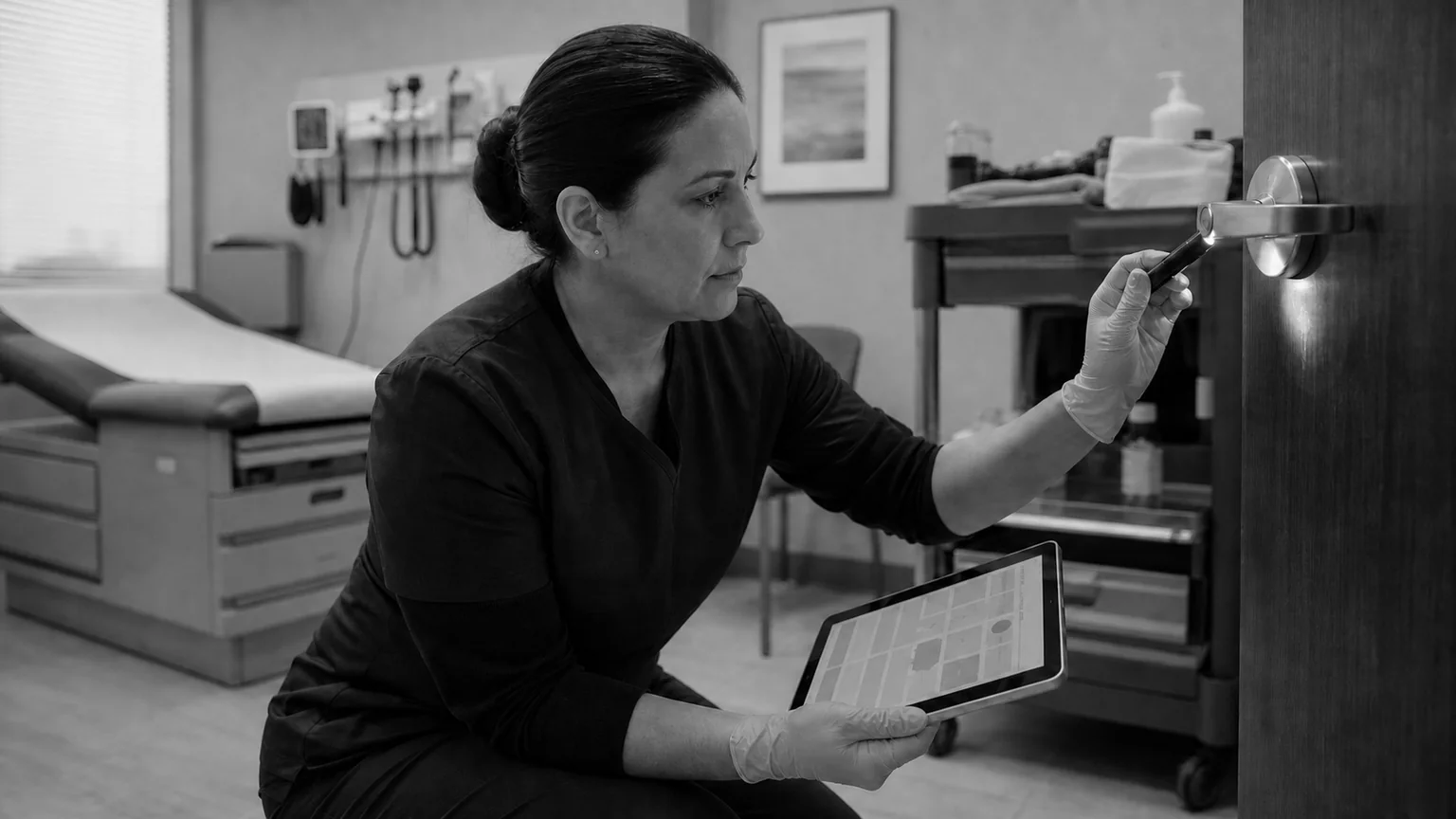
- How often is the surface touched? Door hardware, check-in devices, chair arms, switches, and exam-table controls may need more attention than walls or other low-touch surfaces.
- What contamination is reasonably expected? Visible soil and blood or body-fluid incidents require defined responses.
- Who owns the task? Environmental cleaners should not assume responsibility for reusable clinical devices, instruments, sharps, or sensitive equipment unless the facility has assigned the work in writing and supplied an approved procedure.
CDC’s environmental infection-control recommendations support more frequent attention to high-touch surfaces and cleaning methods suited to the setting. They do not create one universal schedule for every clinic.
The disinfectant label controls the application
“Hospital grade” is not a complete procedure. The selected product must be EPA-registered for the intended use, and the team must follow its current label. The label governs matters such as:
- target organisms and use sites;
- whether pre-cleaning is required;
- dilution and application method;
- the time the surface must remain wet;
- compatible materials;
- personal protective equipment, storage, and disposal.
A quick spray-and-wipe may fail to satisfy the label. Conversely, applying extra product or mixing chemicals does not improve the process and may introduce exposure or material-damage risks.
Put responsibilities into a room-by-room matrix
For each room, record the surface, responsible role, task, frequency, approved product or method, and verification step. A simplified matrix might look like this:
| Area | Surface | Assigned role | Task and timing | Verification |
|---|---|---|---|---|
| Reception | Door handles and counter edge | Cleaning team | Approved routine method at scheduled intervals | Supervisor observation |
| Exam room | Environmental high-touch surfaces | Facility-defined | Between-patient or end-of-day procedure established by the clinic | Room checklist |
| Exam room | Reusable clinical device | Clinical staff unless formally reassigned | Manufacturer- and facility-approved reprocessing | Clinical record |
| Restroom | Handles, dispensers, faucets | Cleaning team | Clean and disinfect according to the approved schedule | Inspection and supply check |
Where cleaners may face occupational exposure to blood or other potentially infectious materials, the facility should also address applicable responsibilities under OSHA’s Bloodborne Pathogens housekeeping guidance.
How 365 Spotless approaches the walkthrough
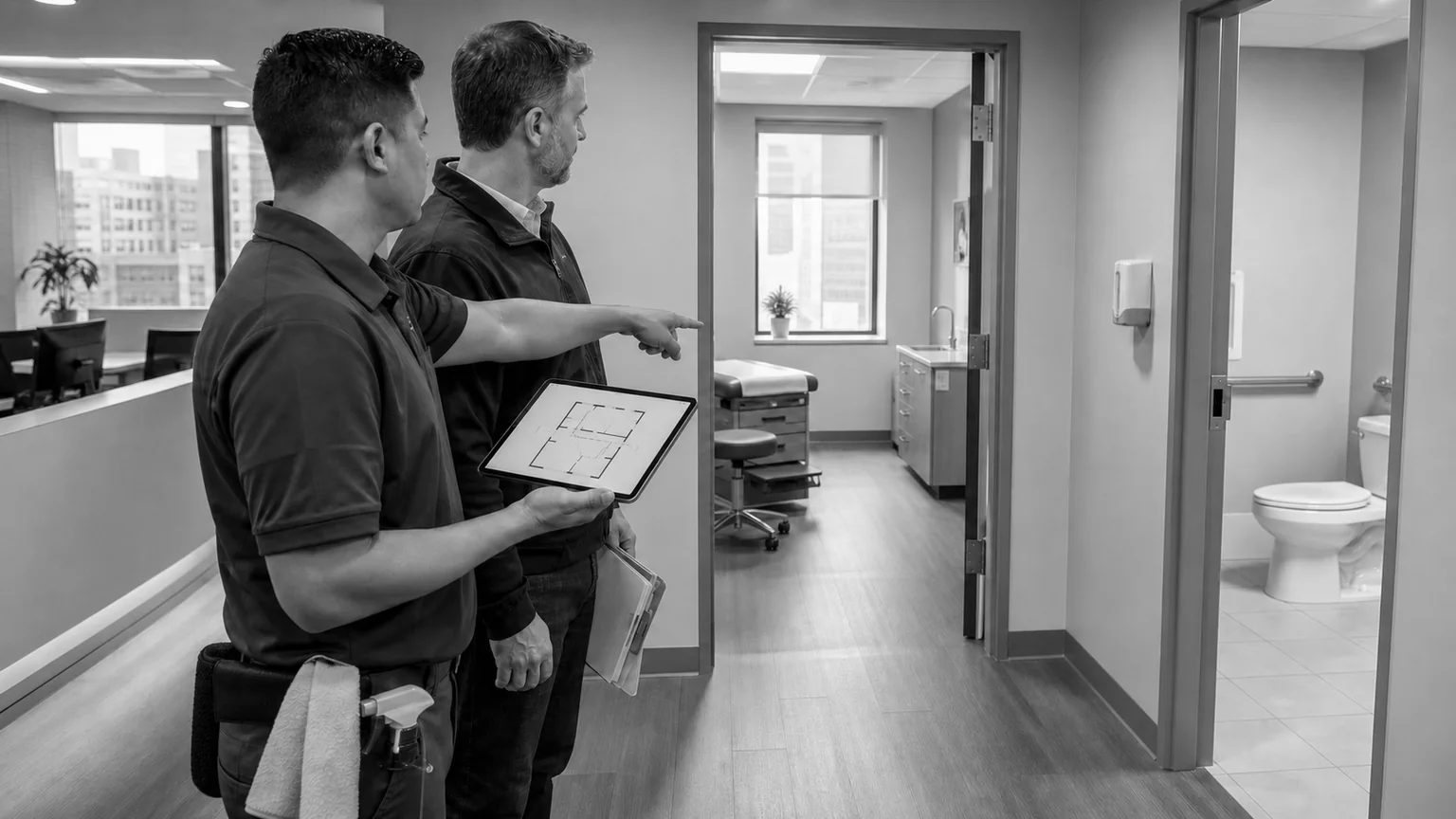
365 Spotless publicly describes a four-step process: request a walkthrough, assess the facility, receive a clear proposal, and complete the work with reporting. For medical-office cleaning, that walkthrough should identify room types, high-touch surfaces, exclusions, clinical handoffs, access restrictions, approved products, service timing, and inspection expectations before pricing is finalized.
This is more reliable than copying a generic checklist into a contract. Explore the company’s NYC medical and healthcare cleaning service or schedule a facility walkthrough to build a scope around the actual space.
Questions to ask a medical cleaning company
- Which surfaces will be cleaned, disinfected, or excluded?
- Who approves the product list and current labels?
- How are wet contact times communicated and observed?
- How are restroom tools separated from clinical-area tools?
- Who handles clinical equipment, sharps, and regulated waste?
- What happens when a task is missed or a room’s use changes?
- What evidence appears in the completion or inspection report?
Frequently asked questions
Does every medical-office surface need disinfectant?
No. The facility should select procedures by room use, touch frequency, contamination risk, surface compatibility, and applicable guidance. Routine cleaning may be appropriate for some low-touch surfaces, while approved high-touch or near-patient surfaces may require disinfection.
Is a clean-looking surface necessarily disinfected?
No. Appearance can show that visible soil was removed, but it cannot confirm that the correct disinfectant, application method, and label contact time were used.
Can a commercial cleaner reprocess dental or medical instruments?
Not by default. Instrument and device reprocessing belongs to trained personnel following facility policy and manufacturer instructions unless responsibility has been explicitly and appropriately reassigned.
This article provides operational information, not clinical or legal advice.