Blood and Body-Fluid Spill Response for Medical Offices
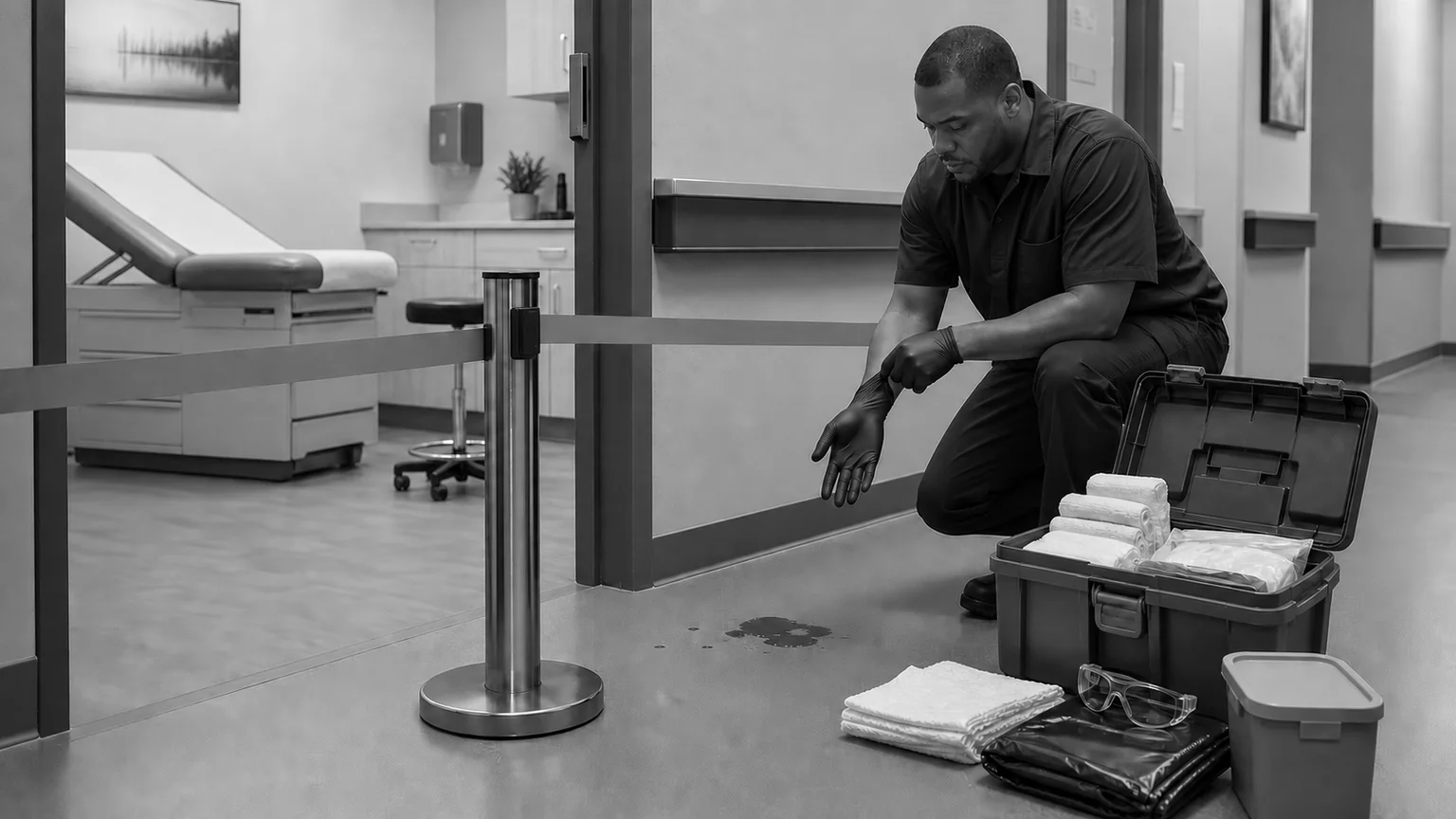
A blood or body-fluid spill is not an ordinary janitorial task. The medical office should decide in advance who secures the area, who is trained and authorized to respond, what procedure and supplies apply, and how an exposure or sharps hazard is escalated.
Where workers may have occupational exposure to blood or other potentially infectious materials, OSHA’s Bloodborne Pathogens requirements may apply. OSHA’s housekeeping guidance says the written cleaning schedule and decontamination method should reflect the location, surface, contamination, and tasks performed.
Assign roles before the spill occurs
A practical plan names responsibility for each stage:
| Stage | Decision required |
|---|---|
| Immediate control | Who restricts access and protects patients, staff, and visitors? |
| Hazard assessment | Who determines whether blood, sharps, chemicals, or damaged equipment are involved? |
| Response | Which trained and authorized person performs the cleanup? |
| Clinical escalation | When must clinical or infection-prevention leadership take control? |
| Exposure response | Who receives the report and activates post-exposure procedures? |
| Documentation | What incident, waste, and corrective-action records are required? |
“Call housekeeping” is not enough if the assigned person lacks training, PPE, supplies, access, or authority.
Stock a facility-approved response kit
The contents should follow the facility’s exposure-control plan and risk assessment. Depending on the approved procedure, that may include:
- task-appropriate PPE in usable sizes;
- absorbent materials and tools that minimize direct handling;
- the approved EPA-registered disinfectant and current directions;
- a method for isolating contaminated tools or materials;
- compliant waste containers and labels;
- a sharps container accessible without moving the sharp by hand;
- warning signs or barriers;
- incident and exposure-reporting instructions.
Inspect the kit on a schedule. An expired product, missing gloves, dried wipes, or inaccessible sharps container can defeat an otherwise sound plan.
Treat sharps as a separate hazard
Never direct cleaning staff to pick up broken glass or sharps by hand. The written procedure should specify approved mechanical means, the correct container, and the role authorized to act. If a sharp is hidden in linen, trash, or beneath a spill, stop and escalate under the facility’s plan.
Match the disinfectant to the approved procedure
The team must follow the current registered label, including any pre-cleaning, dilution, wet contact time, PPE, and disposal directions. CDC’s environmental infection-control recommendations address blood and body-substance contamination and reinforce the need for an appropriate process rather than an improvised spray-and-wipe response.
Do not mix chemicals or assume that a stronger concentration is safer. Surface damage, fumes, and worker exposure are predictable consequences of improvisation.
Coordinate the clinic and cleaning contractor
Before service begins, both parties should confirm:
- which spills remain clinical responsibility;
- which cleaning personnel are trained and authorized;
- where response kits, labels, and safety data sheets are located;
- how responders reach a supervisor after hours;
- who handles regulated waste and contaminated reusable tools;
- when an incident stops routine cleaning;
- how exposures, near misses, and missing supplies are reported.
A tabletop exercise is valuable: walk through a realistic event after hours, including a sharp, an unavailable supervisor, or a product shortage. Revise any step that depends on luck or an unstated assumption.
What to verify during a walkthrough
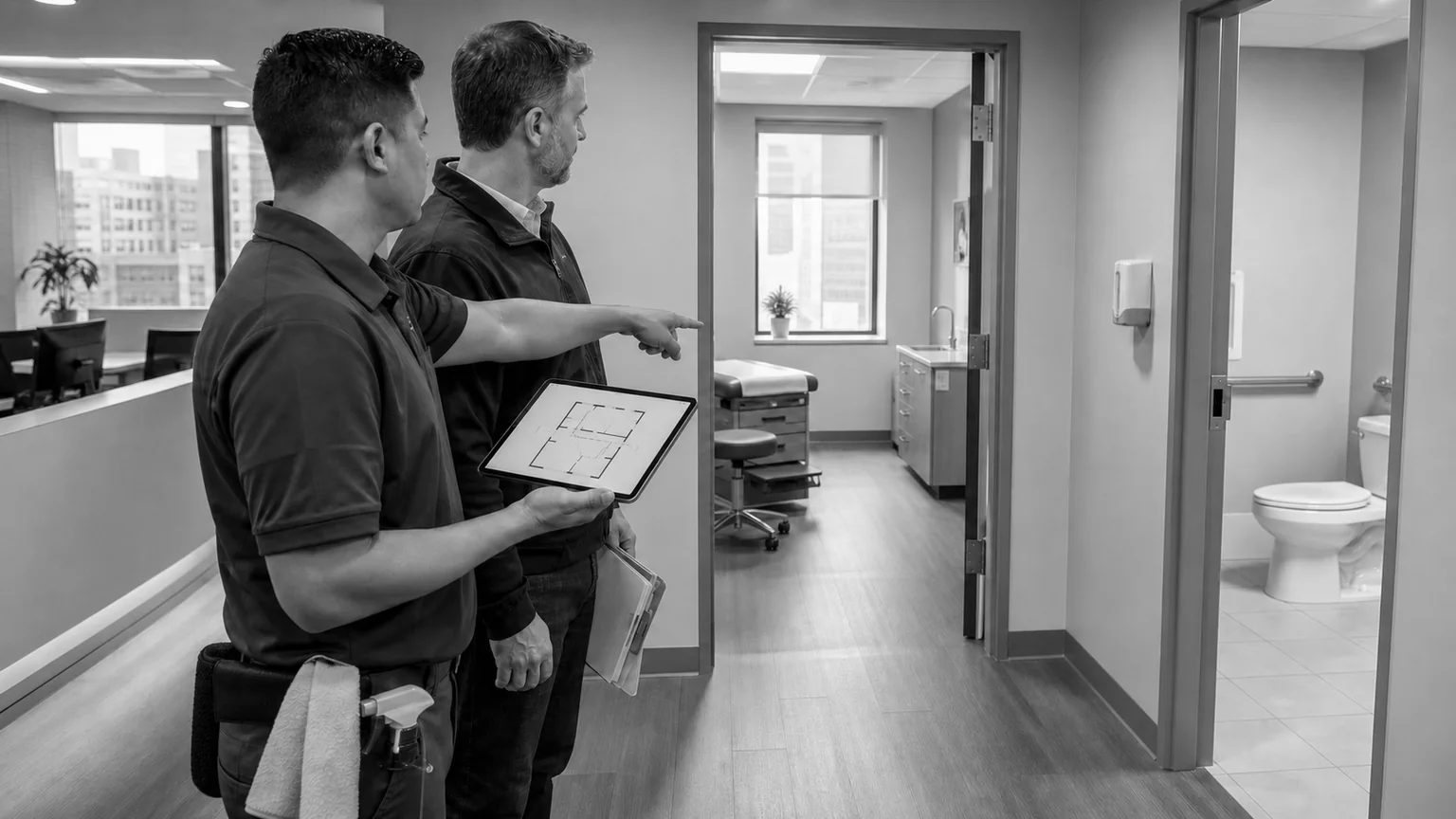
365 Spotless’s public process begins with a facility walkthrough and assessment before a proposal is issued. For a medical office, use that step to document spill-response boundaries and escalation contacts rather than burying them in generic contract language. Review medical cleaning services or request a walkthrough.
Frequently asked questions
Can an ordinary office cleaner handle a blood spill?
Not automatically. The facility must evaluate potential exposure, applicable requirements, training, PPE, vaccination and post-exposure provisions where required, and the worker’s assigned responsibilities.
Who writes the spill procedure?
The host medical office should develop and approve it with appropriate safety, clinical, infection-prevention, and occupational-health input. A contractor can help document operational handoffs but should not replace the facility’s authority.
Should every body-fluid incident use the same process?
No. The material, location, surface, volume, sharps involvement, and facility policy can change the required response.
This article is educational and is not a substitute for a facility-specific exposure-control plan or qualified legal, clinical, or safety advice.