Office Cleaning Schedule for Hybrid Workplaces in NYC
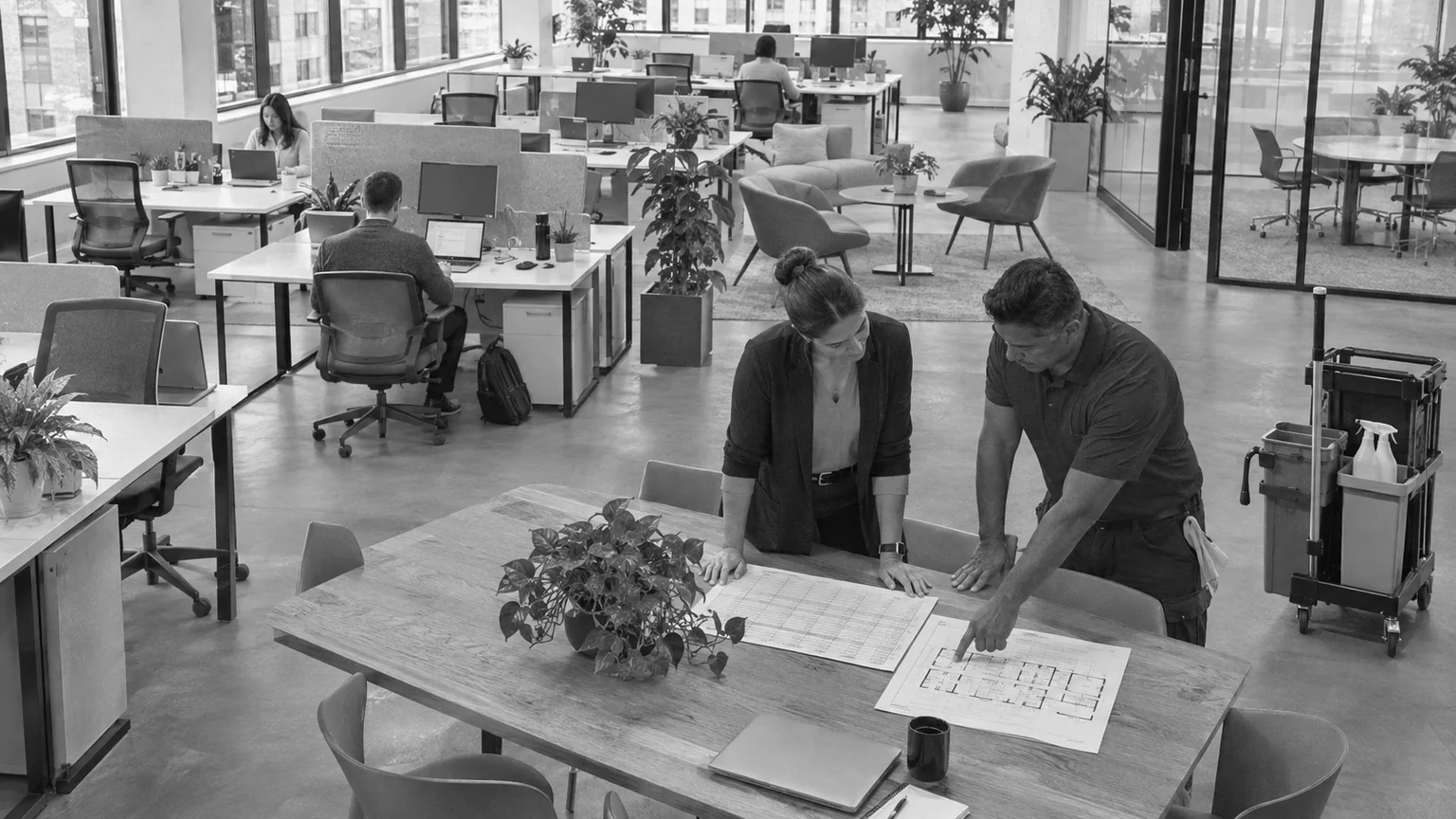
A hybrid office should not rely on the same route every night. The better schedule combines a daily hygiene and appearance baseline, occupancy-driven tasks, triggered response work, and planned periodic maintenance. That directs labor toward the spaces employees actually used without allowing quiet zones to deteriorate.
Start with a daily baseline
Regardless of headcount, review:
- occupied restrooms and consumable levels;
- food-preparation and eating areas;
- waste and recycling stations;
- entrances and active reception areas;
- visible spills and tracked-in soil;
- shared rooms used that day;
- safety, access, damage, or maintenance issues requiring escalation.
Routine cleaning is generally the foundation in non-healthcare community settings. CDC’s facility cleaning guidance advises considering targeted disinfection when someone is ill or facility conditions warrant it rather than treating indiscriminate disinfection as the default.
Add occupancy-based triggers
Use room bookings, access data, event calendars, and facility observations to adjust service. Examples:
| Signal | Possible route response |
|---|---|
| Large meeting or training day | Add meeting-room reset, waste collection, and pantry checks |
| Low-attendance floor | Maintain restroom, waste, and visible-condition baseline; defer approved detail work |
| Hoteling desk turnover | Apply the facility’s shared-workstation procedure |
| Client event | Add reception, glass, restroom, and post-event tasks |
| Heavy rain or snow | Increase entrance-mat and floor checks |
| Reported illness | Follow the facility’s approved targeted-cleaning or disinfection response |
Attendance data should inform the scope, not be used to skip contracted essentials without approval.
Separate daily, weekly, and periodic work
Daily or service-day work
Restrooms, pantries, waste, active shared areas, visible soil, and contracted touchpoints.
Weekly rotation
Low-touch dusting, interior glass, partitions, detailed furniture cleaning, edges, and less-used rooms.
Periodic projects
Carpet extraction, hard-floor restoration, upholstery work, high dusting, and other tasks requiring access, drying time, or specialist equipment.
Put periodic work on a calendar and state whether it is included, separately priced, or condition-triggered.
Build a measurable zone schedule
For each zone, document:
- rooms and cleanable surfaces;
- task and frequency;
- occupancy or condition trigger;
- exclusions and responsible parties;
- service window and access rules;
- acceptance criteria;
- inspection and issue-response process.
Avoid words such as “as needed” unless the trigger and authorized decision-maker are clear.
Use real office patterns
365 Spotless’s public client feedback includes offices with shared meeting/lunch space, reception-area reset needs, restroom complaints, and a soap-dispenser failure. Those examples point to four useful controls: define shared-space turnover, schedule visible front-of-house work, measure restroom outcomes, and require cleaners to report maintenance issues instead of ignoring them.
The company’s process begins with a walkthrough and facility assessment before a proposal is issued. Walk the office during a busy period and after hours to understand both demand and access. Explore office cleaning services or schedule a walkthrough.
Monthly schedule review
Compare:
- occupancy and event changes;
- complaints by room and time;
- consumable use and waste volume;
- repeated access problems;
- inspection findings;
- overtime or uncompleted tasks;
- upcoming seasonal or periodic work.
Then revise the route deliberately. Hybrid schedules work when they respond to evidence rather than merely reducing frequency.
Frequently asked questions
How often should a hybrid office be cleaned?
There is no universal frequency. Base it on occupancy, room use, restrooms and food areas, building rules, lease obligations, employee needs, and the required appearance and hygiene standard.
Should empty desks be cleaned every night?
The facility should define the shared-desk policy and approved frequency. Use occupancy signals to prioritize work, but retain periodic dust and condition checks.
Is overnight cleaning enough for a busy hybrid office?
It may be, but high-demand restrooms, pantries, events, and spills can justify a daytime porter or scheduled touch-up layer.