Office Cleaning and Indoor Air Quality: Responsibilities and Limits
Cleaning can reduce dust and avoid introducing unnecessary pollutants, but it does not “fix” indoor air quality by itself. Office IAQ also depends on ventilation, moisture, pollutant sources, occupancy, space use, maintenance, and the building envelope.
EPA’s office IAQ guidance treats indoor air quality as a shared building-management issue. A cleaning contractor’s most useful roles are controlling its own processes, capturing soil effectively, and reporting conditions that require facilities or technical investigation.
Cleaning practices that can support IAQ
Capture dust instead of redistributing it
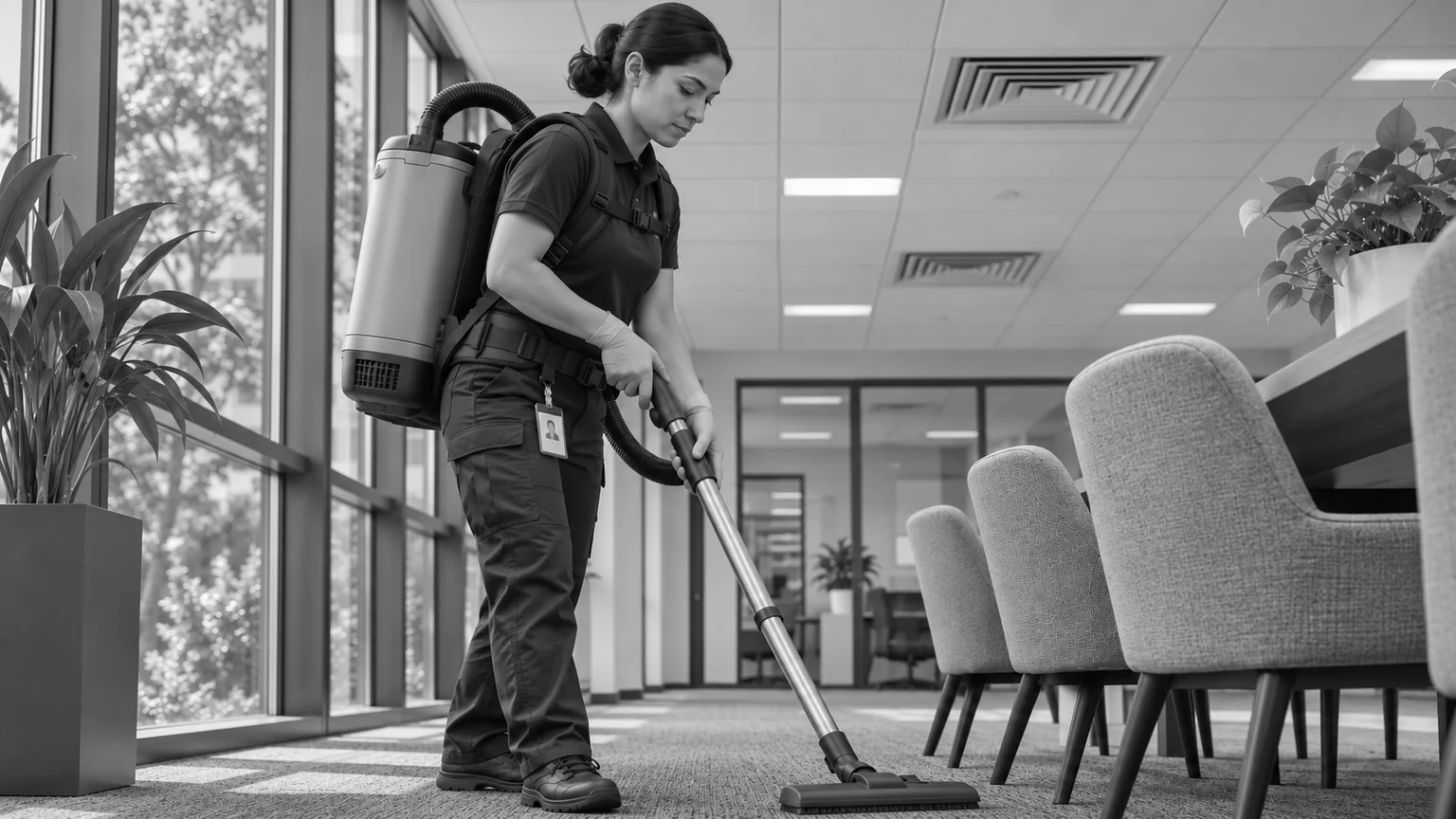
Use task-appropriate vacuums, filters, microfiber or other soil-capture tools, and maintained equipment. Avoid dry methods that simply move fine dust from furniture into the air.
Control products and dilution
Maintain an approved product list, follow labels and safety data sheets, keep containers closed, and prevent unmarked secondary bottles. More chemical and more fragrance do not mean a cleaner environment.
Schedule disruptive work carefully
Carpet extraction, floor refinishing, high dusting, and strong-odor work may require lower occupancy, ventilation coordination, isolation, or extended drying time.
Store chemicals correctly
Keep products in approved locations away from air intakes, food, heat, and incompatible materials. Address leaks and damaged containers promptly.
Prevent moisture from lingering
Cleaners should report leaks, wet carpet, condensation, and water-stained materials. Cleaning can remove a small spill, but recurring or hidden moisture requires building investigation.
Conditions the cleaning team should report
- persistent or unusual odors;
- recurring dust near vents or construction zones;
- condensation, ceiling stains, or damp materials;
- visible mold-like growth without disturbing it;
- blocked supply or return grilles;
- damaged filters or equipment observed from authorized areas;
- pest evidence;
- chemical spills or incompatible storage;
- clusters of occupant complaints.
The EPA Office Building Occupant’s Guide encourages occupants and management to report patterns and building conditions rather than assuming a single source.
What cleaning cannot diagnose
| Complaint | Cleaning response | Escalation that may be needed |
|---|---|---|
| Dust on surfaces | Review capture method, route, and construction soil | HVAC filtration, pressure, envelope, or renovation review |
| Musty odor | Report moisture and avoid disturbing suspect material | Moisture/mold assessment by qualified personnel |
| Chemical odor | Stop or adjust approved cleaning process and report | Product, ventilation, spill, or neighboring-tenant investigation |
| Stuffy room | Confirm cleaning is not blocking vents | Ventilation and occupancy assessment |
| Wet carpet | Extract only if authorized and address immediate spill | Leak repair, drying, and material evaluation |
Do not advertise health outcomes or guaranteed IAQ improvement without measurement and evidence.
Write an IAQ-aware cleaning scope
Include:
- approved products and substitution rules;
- fragrance restrictions;
- equipment and filtration requirements;
- chemical-storage locations;
- dust-capture and tool-maintenance methods;
- timing and ventilation coordination for periodic projects;
- moisture and odor escalation;
- complaint logging and named contacts;
- before-and-after project documentation where useful.
If environmental purchasing is a goal, EPA’s Safer Choice product search can help identify products meeting defined program criteria. Certification still does not replace surface compatibility or correct use.
Use the walkthrough to connect teams
During a 365 Spotless assessment, facilities can identify occupant-sensitive zones, approved products, HVAC restrictions, chemical storage, periodic-project timing, and issue-reporting contacts before service begins. Review NYC office cleaning services or request a walkthrough.
Frequently asked questions
Can office cleaning improve indoor air quality?
Cleaning may reduce dust and avoidable pollutant sources when appropriate tools and products are used. IAQ outcomes also depend on ventilation, moisture, source control, occupancy, and building systems.
Should a cleaner remove suspected mold?
Do not disturb an unknown condition. Secure the area as appropriate, report it, and follow the facility’s assessment and remediation process.
Are fragrance-free products always safer?
Fragrance preferences can reduce complaints for some occupants, but safety depends on the complete product, exposure, task, and correct use—not a single marketing characteristic.